
Large glass surfaces may look modern and inviting, yet they often allow excess heat, glare, and UV exposure to enter the building. This is where window tint plays a crucial role, helping control these issues while improving overall efficiency and comfort within the space.
This is where commercial window tint becomes a practical and long-term solution. It is no longer just a cosmetic upgrade; it is widely used in offices, retail stores, and commercial buildings to improve comfort, reduce costs, and protect interiors while maintaining natural light.
What Is a Commercial Window Tint?
Commercial tint refers to a specially designed window privacy film applied to glass surfaces in business environments. In essence, its primary role is to enhance both functionality and comfort within commercial spaces. More importantly, it helps regulate how much sunlight, heat, and ultraviolet radiation enters a building.
At the same time, it maintains a careful balance, allowing natural daylight to pass through without completely darkening the interiors. As a result, businesses can enjoy a brighter environment while still reducing glare, heat buildup, and potential UV damage.
Once installed, the film acts as a protective layer. It filters incoming light, reduces glare on screens and workspaces, and helps maintain a more stable indoor temperature. Depending on the type used, it can also enhance privacy or strengthen glass durability. In simple terms, it is a smart way to improve how glass performs in a commercial setting.
Key Benefits of Commercial Window Tint
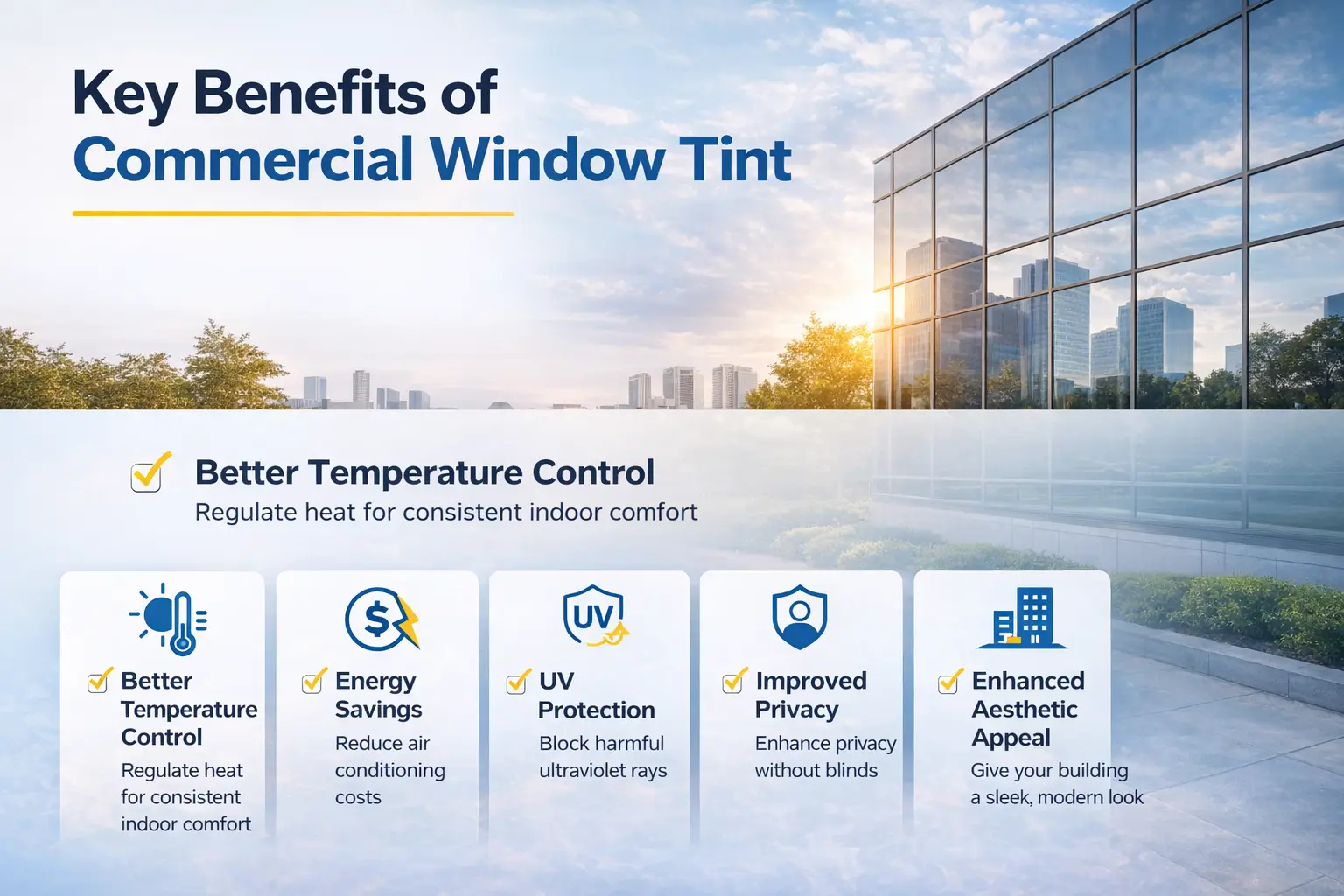
1. Better Temperature Control
One of the most noticeable advantages is improved indoor comfort. Large windows often allow excessive heat buildup, especially during peak summer months. Commercial window tint helps regulate this by reducing solar heat gain, resulting in a more balanced indoor environment that feels comfortable throughout the day.
2. Energy Savings
When indoor temperatures stay more consistent, air conditioning systems do not have to work as hard. Over time, this leads to noticeable reductions in electricity consumption. For businesses operating in large office spaces or glass-heavy buildings, this can translate into meaningful cost savings.
3. UV Protection
Ultraviolet rays can gradually damage furniture, flooring, signage, and office equipment. Commercial office window tinting blocks a significant portion of these harmful rays, helping preserve interiors for a longer period. It also contributes to a healthier indoor environment for employees and customers.
4. Improved Privacy
Not every workspace is meant to be fully visible from the outside. Window tint provides an effective way to maintain privacy without closing blinds or curtains. It allows natural light to enter while limiting outside visibility, making it ideal for meeting rooms, office cabins, and storefronts.
5. Enhanced Aesthetic Appeal
Beyond functionality, commercial window tint also improves the overall appearance of a building. Additionally, it gives glass surfaces a uniform, polished look that, in turn, enhances a modern architectural style. As a result, this subtle enhancement creates a more professional and welcoming impression.
Types of Commercial Window Tint Solutions
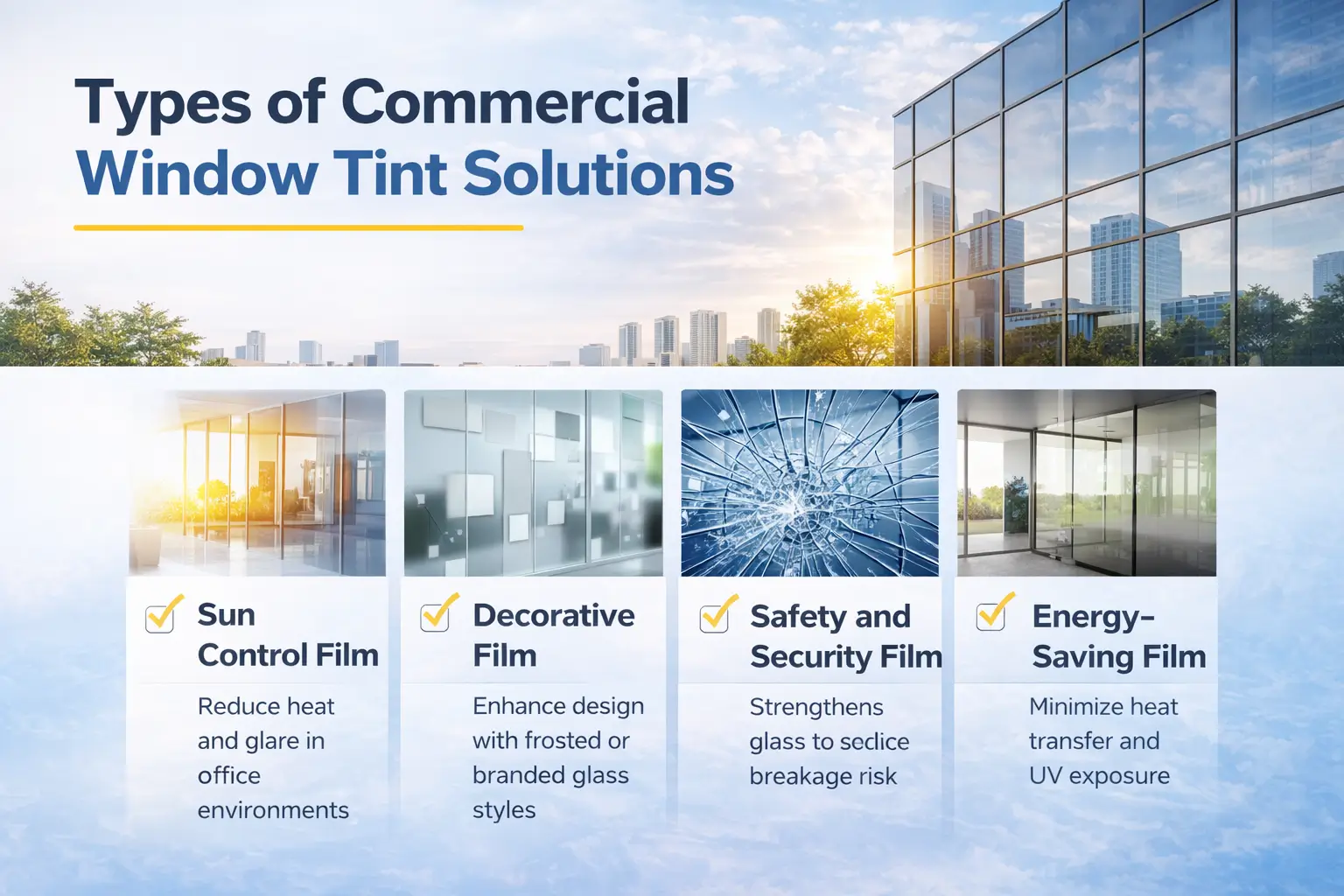
1. Sun Control Film
This type is designed primarily to reduce heat and glare. As a result, it is commonly used in office spaces where sunlight exposure is high, thereby helping create a more comfortable working environment.
2. Decorative Film
3. Safety and Security Film
This film adds an extra layer of strength to glass surfaces. In case of accidental impact or breakage, it helps hold shattered glass together, reducing the risk of injury and improving security.
4. Energy-Saving Film
Focused on efficiency, this option helps minimize heat transfer and UV exposure. It is particularly useful for businesses aiming to reduce long-term operational costs while maintaining indoor comfort.
Common Myths About Commercial Window Tint
1. Makes interiors too dark
Modern window privacy films reduce heat and glare while still allowing natural light inside, keeping spaces bright and usable.
2. Only for privacy
It also improves temperature control, UV protection, and energy efficiency, not just privacy.
3. No impact on energy bills
By lowering heat inside, it reduces AC usage and can help cut electricity costs.
4. Purely decorative
Most films are functional, designed for comfort, protection, and efficiency.
Factors to Consider Before Choosing Window Tint
- The primary purpose: heat control, privacy, security, or design
- The type and condition of existing glass surfaces
- The direction and intensity of sunlight exposure
- Energy efficiency goals of the building
- Budget and expected long-term savings
- Local climate conditions and seasonal variations
Final Thoughts
Commercial window tint is more than just an upgrade in appearance, it is a practical investment in comfort, efficiency, and protection. For business owners, it offers a balanced solution to everyday challenges like heat control, privacy concerns, and rising energy costs, all while enhancing the overall look of the workspace.
Get in touch today!
FAQs
1. How long does commercial window tint last?
Commercial window tint can last many years when professionally installed and properly maintained. Its lifespan often depends on film quality, exposure to sunlight, and environmental conditions.
2. Will window tint make my office too dark?
No, modern commercial window films are designed to reduce heat and glare without significantly blocking natural light. Different tint levels are available to match specific needs.