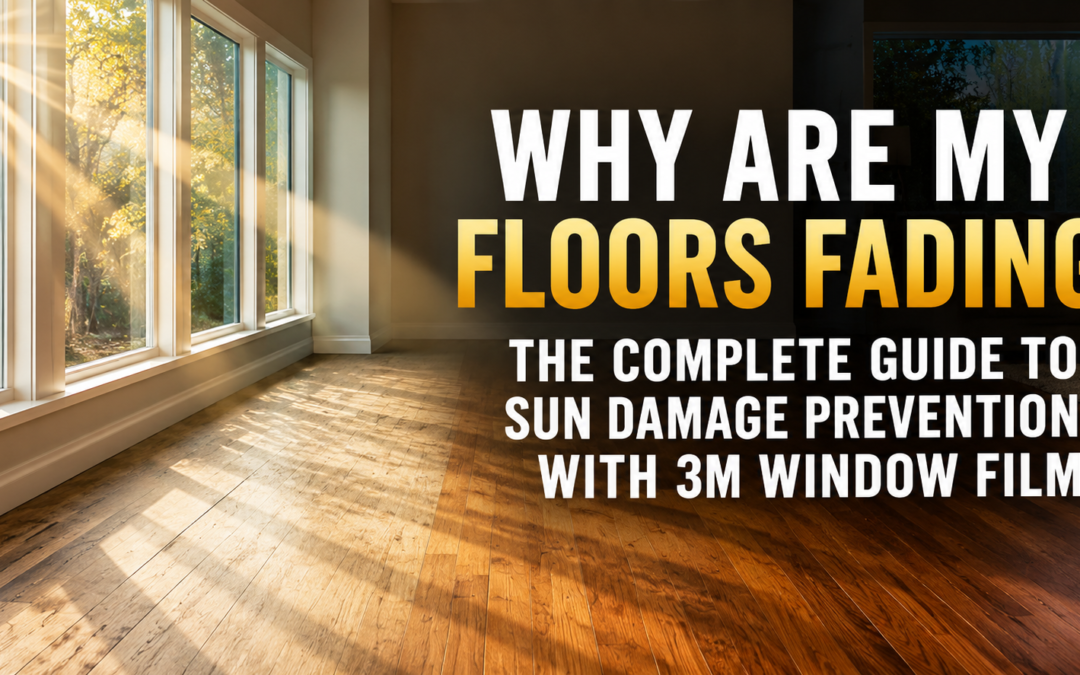
If your hardwood floors look bleached near the windows, your carpet appears worn in sunny patches, or your furniture seems to age faster than it should — sun damage is almost certainly the reason. This is one of the most overlooked causes of interior deterioration in homes and offices, and installing window film can help protect your floors, furniture, and interior surfaces from further UV-related damage.
This guide explains exactly why sun fades your floors, what science says about each cause, and how 3M Sun Control Window Film compares to other protection methods — so you can make an informed decision before the damage gets worse.
Does Sunlight Really Fade Floors?
Yes — and it happens faster than most homeowners expect.
Studies in the window film industry consistently show that unprotected windows allow up to 99% of UV rays to pass through standard glass. UV rays are invisible, which means damage accumulates silently over months and years without a single visible “event.”
The fading process works on a cellular level: sunlight breaks down the chemical bonds in dyes, pigments, and protective finishes. Once those bonds are broken, the color cannot be restored without refinishing or replacing the material entirely.
The good news: fading caused by sunlight is largely preventable with the right intervention at the window — the point of entry.
The 3 Scientific Causes of Floor Fading
Understanding the exact causes helps you choose the right protection. Sun damage is not caused by a single factor — it results from three distinct types of solar energy hitting your interior surfaces simultaneously.
1. Ultraviolet (UV) Radiation — Responsible for ~40% of Fading
UV rays fall outside the visible light spectrum, which is why you cannot see or feel them directly. However, they carry enough energy to break down molecular bonds in flooring finishes, wood pigments, and carpet dyes.
- UV-A rays (315–400 nm): Long-wave, penetrate deeply into materials
- UV-B rays (280–315 nm): Shorter wave, extremely damaging to surface finishes
Standard float glass used in most windows blocks very little UV-A radiation. This is why interiors fade even on cloudy days — UV rays pass through overcast skies and glass with similar intensity.
2. Infrared (Solar Heat) — Responsible for ~25% of Fading
Infrared radiation is the heat component of sunlight. While it does not directly bleach colors the way UV does, it causes serious structural damage to flooring materials:
- Hardwood: Repeated heating and cooling cycles cause expansion and contraction, leading to warping, cupping, and cracking
- Vinyl and laminate: Prolonged heat exposure can cause bubbling, lifting, and delamination
- Carpet: Heat accelerates fiber breakdown, making carpet feel brittle and matted even in areas that see moderate foot traffic
Solar heat also dramatically raises indoor temperatures near windows, creating uncomfortable hot spots that drive up air conditioning costs.
3. Visible Light — Responsible for ~25% of Fading
This is the sunlight you can actually see. Prolonged exposure to high-intensity visible light bleaches the color out of flooring materials over time — similar to how a photograph left in a sunny window slowly loses its color.
Visible light fading is cumulative and irreversible. A room that receives 6+ hours of direct sunlight daily can show measurable fading within 12–18 months on unprotected hardwood.
Note on the remaining ~10%: Moisture, humidity, chemical cleaners, and foot traffic account for the balance of fading causes. Window film does not address these factors, but it eliminates the three solar causes above.
Which Flooring Types Fade the Fastest?
Not all flooring fades at the same rate. Here is how common materials respond to sun exposure:
| Flooring Type | Fading Risk | Primary Concern |
|---|---|---|
| Solid Hardwood | Very High | UV bleaching + heat warping |
| Engineered Hardwood | High | UV bleaching + delamination risk |
| Bamboo | High | Rapid UV discoloration |
| Carpet (light colors) | High | UV and visible light bleaching |
| Laminate | Moderate–High | UV surface fade + heat bubbling |
| Vinyl / LVP | Moderate | Heat warping, UV color shift |
| Tile (colored) | Low | Grout discoloration over time |
| Concrete (stained) | Moderate | UV fades stain and sealant |
Hardwood floors are among the most expensive to replace, which makes UV protection especially important for homes with wood flooring near large windows, sliding doors, or skylights.
Early Warning Signs of Sun Damage
Sun damage develops gradually. Catching it early can prevent the need for costly floor replacement. Watch for these signs:
Visual Signs:
- Uneven coloration — sections near windows appear noticeably lighter than shaded areas
- Dull or washed-out appearance on previously rich, vibrant floors
- Color “rings” around furniture that has been moved — showing the protected area vs. the faded area
- Bleached or yellowed patches on carpet, especially near south- or west-facing windows
Structural Signs:
- Gaps forming between hardwood planks (caused by heat-related shrinkage)
- Boards cupping or lifting slightly at the edges (caused by heat and moisture imbalance)
- Carpet fibers feeling stiff or brittle despite low foot traffic
If you notice any of these signs, sun exposure has already begun causing irreversible surface damage. The priority at this point is to stop further damage while protecting the remaining finish.
How Window Film Prevents Sun Fading
Window film works by intercepting solar energy at the glass — before it can enter the room and reach your floors, furniture, and walls.
A high-quality solar control window film performs three functions simultaneously:
- UV Rejection: Blocks up to 99% of UV-A and UV-B radiation from passing through the glass
- Solar Heat Rejection: Reflects and absorbs infrared energy, reducing heat gain by 40–80% depending on the film type
- Glare Reduction: Reduces intense visible light transmission without making the room feel dark
Unlike curtains or blinds — which block all light and must be opened and closed manually — window film works passively, 24 hours a day, without obstructing your view or altering your room’s brightness significantly.
What Is 3M Sun Control Film?
3M is one of the most established names in window film technology, with over 50 years of research and development in solar control products. Their Sun Control Film range is designed for both residential and commercial applications.
Key Performance Characteristics of 3M Sun Control Film:
- UV Rejection: Up to 99% of UV rays blocked
- Heat Rejection: Up to 79% of total solar energy rejected (varies by product)
- Glare Reduction: Up to 95% reduction in glare
- Visible Light Transmission (VLT): Ranges from 5% (very dark) to 70%+ (nearly clear) depending on the series
- Warranty: Most 3M residential films carry a lifetime warranty when professionally installed
What Makes 3M Different from Generic Window Film?
3M films use multi-layer nano-technology rather than basic dyes or metallic coatings used in cheaper alternatives. This matters because:
- Dye-based films fade over time and lose their UV blocking ability
- Metallic films can interfere with Wi-Fi and cellular signals
- 3M’s nano-ceramic and nano-metallic films maintain performance for 10–20+ years without signal interference
3M Film vs Other Sun Protection Methods
Before investing in window film, many homeowners consider alternatives. Here is an honest comparison:
| Method | UV Protection | Heat Reduction | View Preserved | Lifespan |
|---|---|---|---|---|
| 3M Sun Control Film | Up to 99% | Up to 79% | Yes | 15–20+ years |
| Curtains / Drapes | Partial (when closed) | Partial | No | 5–10 years |
| Exterior Shade Screens | Moderate | High | Partial | 10–15 years |
| Low-E Replacement Glass | Up to 95% | High | Yes | 20–25 years |
| UV-Blocking Window Blinds | Moderate (when closed) | Low | No | 5–8 years |
| Furniture Rearrangement | None | None | N/A | N/A |
Bottom line: For homes where natural light and views are a priority, window film offers the best balance of UV protection, heat rejection, and cost-effectiveness compared to replacing glass or blocking windows entirely.
Types of 3M Sun Control Film
3M offers several product lines within the Sun Control Film range. Understanding the differences helps you select the right film for your specific situation:
3M Prestige Series
- Best for: Homeowners who want maximum UV and heat protection with no visible tint
- Appearance: Nearly clear; preserves the natural look of windows
- Solar heat rejected: Up to 60%
- UV rejected: Up to 99%
- Ideal use: Living rooms, offices, any room where appearance matters
3M Night Vision Series
- Best for: Homes needing both daytime privacy and sun protection
- Appearance: Reflective from outside during the day
- UV rejected: Up to 99%
- Ideal use: Ground-floor rooms, rooms facing the street
3M Safety Series with Sun Control
- Best for: Homeowners wanting dual benefits — shatter protection and UV blocking
- Appearance: Lightly tinted
- Additional benefit: Holds glass together if broken, reducing injury risk
3M Thinsulate™ Climate Control Series
- Best for: Year-round energy savings — heat retention in winter, heat rejection in summer
- UV rejected: Up to 99%
- Ideal use: Climates with cold winters and hot summers
If you are unsure which product is right for your windows, orientation, and goals — a professional site assessment is the most reliable way to determine the best fit.
Professional vs DIY Installation
Window film is available as a DIY product, but there are important differences between professional and self-installed film:
Professional Installation
- Film applied with no bubbles, creases, or lifting edges
- Proper surface preparation ensures maximum adhesion and film life
- Professional-grade film products unavailable at retail
- Warranty typically honored only with certified installation
- Correct film selection for window type, orientation, and glass thickness
DIY Installation
- Retail film quality significantly lower than professional-grade products
- Bubbles and misalignment common without experience and tools
- Incorrect film on tempered or low-E glass can cause thermal stress cracking
- No warranty protection in most cases
- Must be redone if applied incorrectly — doubling cost
Recommendation: For any permanent installation intended to protect flooring and furnishings, professional installation is the safer long-term investment.
How to Choose the Right Window Film
When selecting a window film for sun protection, consider these key factors:
1. Window Orientation
- South-facing windows: Receive the highest annual solar exposure — prioritize high heat rejection films
- West-facing windows: Receive intense afternoon sun — important for flooring protection
- East-facing windows: Morning sun only — moderate priority
- North-facing windows: Minimal direct sun — low priority for fading prevention
2. Glass Type
Not all films are compatible with all glass types. Certain high-heat-rejection films on single-pane glass can cause thermal stress fractures. A certified installer will assess glass type before recommending a film.
3. Visible Light Transmission (VLT)
Higher VLT = lighter appearance. If you want to maintain a bright room, choose a film with 40–70% VLT. If glare reduction is the primary goal, a lower VLT film may be more appropriate.
4. Your Primary Goal
- Fading prevention only: A high UV rejection film with moderate heat control (e.g., 3M Prestige 70) may be sufficient
- Cooling + fading prevention: A high solar heat rejection film is recommended
- Energy savings + fading: Consider a dual-purpose product like 3M Thinsulate
Frequently Asked Questions
How much of floor fading can window film actually prevent?
Window film blocks up to 99% of UV rays and up to 79% of solar heat — the two primary causes of fading. Since UV and heat together account for roughly 65% of all fading causes, professionally installed window film can significantly slow fading, though it does not eliminate it entirely (visible light and other factors still contribute).
Will my room look darker after window film is installed?
Not necessarily. Modern high-performance films like the 3M Prestige series are designed to maintain high visible light transmission. A professionally selected film can reject significant heat and UV while allowing 50–70% of natural light to pass through — often imperceptible to the naked eye.
Does window film work on double-pane (insulated) glass?
Yes, but film selection is critical. Certain films are specifically designed for double-pane or low-E glass. An improperly selected film can trap heat between panes and cause seal failure or glass breakage. Always have a professional assess your glass type before installation.
How long does 3M Sun Control Film last?
3M residential window films carry a lifetime warranty when professionally installed. In real-world conditions, performance typically remains high for 15–25 years before any noticeable decline in UV rejection or clarity.
Does window film protect furniture and artwork as well as floors?
Yes. The same UV radiation and heat that fades floors also damages upholstery, curtains, wooden furniture, artwork, and photographs. Window film provides the same protection to all interior surfaces simultaneously.
Can I apply window film to windows that already have a coating or tint?
It depends on the existing coating type. Adding film over certain factory coatings (especially reflective or low-E coatings) can trap heat and cause damage. Professional assessment is required to determine compatibility.
Will window film affect my internet or cell phone signal?
Standard metallic films can interfere with Wi-Fi and cellular signals. However, 3M’s nano-ceramic and non-metallic film options are signal-transparent and do not cause interference — an important consideration for home offices and areas with multiple connected devices.
How do I clean windows after film is installed?
Wait at least 30 days after installation before cleaning filmed windows, as the adhesive needs time to fully cure. After that, clean with a soft cloth and a mild, non-abrasive cleaning solution. Avoid ammonia-based products (such as standard Windex), which can degrade the film over time.
Does window film work on skylights?
Yes. Skylight window film is particularly effective because skylights receive near-direct overhead sunlight for much of the day. However, skylights often require specific film types due to the angle and heat exposure — professional installation is strongly recommended.
Is window film worth it for renters?
Window film can be removed from glass without damage if installed properly, making it suitable for rental properties. Some landlords may need to approve installation first. The protection benefits can still significantly extend the life of flooring and furnishings even during a tenancy.
Summary: Key Takeaways
- Sun fading is caused by three factors: UV radiation (40%), infrared heat (25%), and visible light (25%)
- Hardwood, bamboo, and carpet are the most vulnerable flooring types
- Window film blocks up to 99% of UV rays and up to 79% of solar heat without blocking your view
- 3M Sun Control Film uses nano-technology for long-lasting performance with a lifetime warranty
- Film outperforms curtains and blinds for passive, full-time protection
- Professional installation is recommended to ensure compatibility, performance, and warranty coverage
- The right film depends on your window orientation, glass type, and primary goal
Want to find out which 3M window film is right for your home? Contact our team at All Spec Sun Control for a free on-site consultation. We’ll assess your windows, orientation, and flooring type to recommend the most effective solution for your specific situation.