
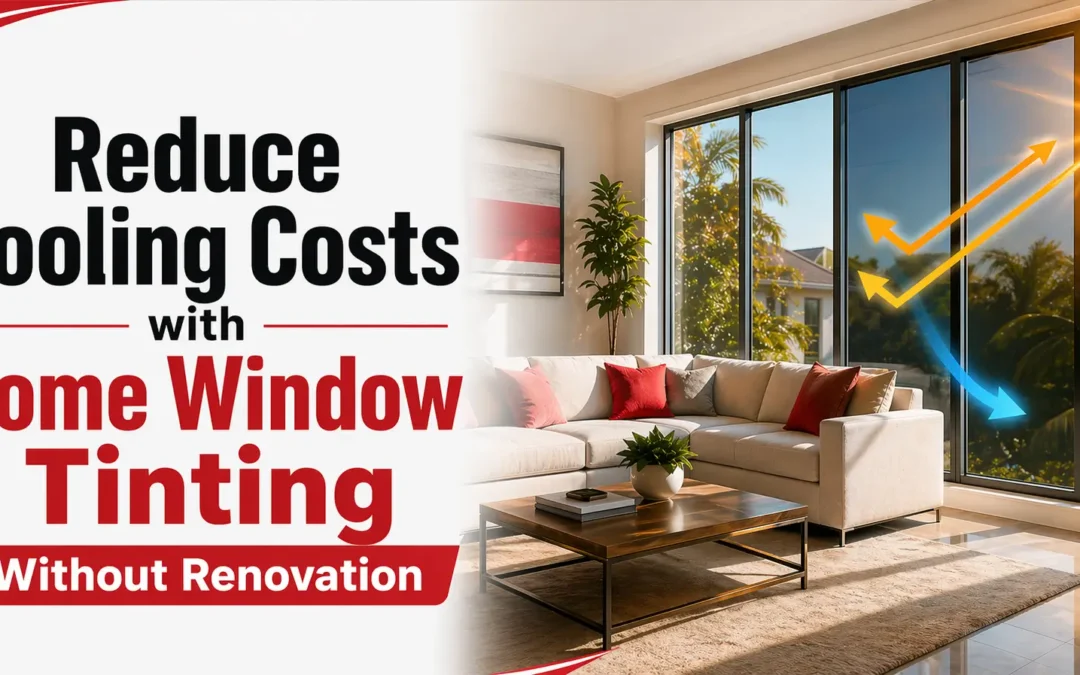
Rising electricity bills and long summers have made home cooling a constant concern for many homeowners, especially in warmer regions like Florida. In fact, air conditioners often run for long hours, yet indoor comfort still feels uneven. However, a major reason behind this issue is not always the AC system itself, but the heat entering through windows—this is where window tinting becomes an effective solution. Moreover, glass surfaces allow solar energy to pass through, warming up interiors faster than expected.
This is where home window tinting comes into the picture. It offers a practical way to reduce indoor heat gain without replacing windows or making any structural changes. It is a simple upgrade that focuses on improving comfort while directly addressing energy efficiency.
The Real Problem: How Heat Enters Your Home
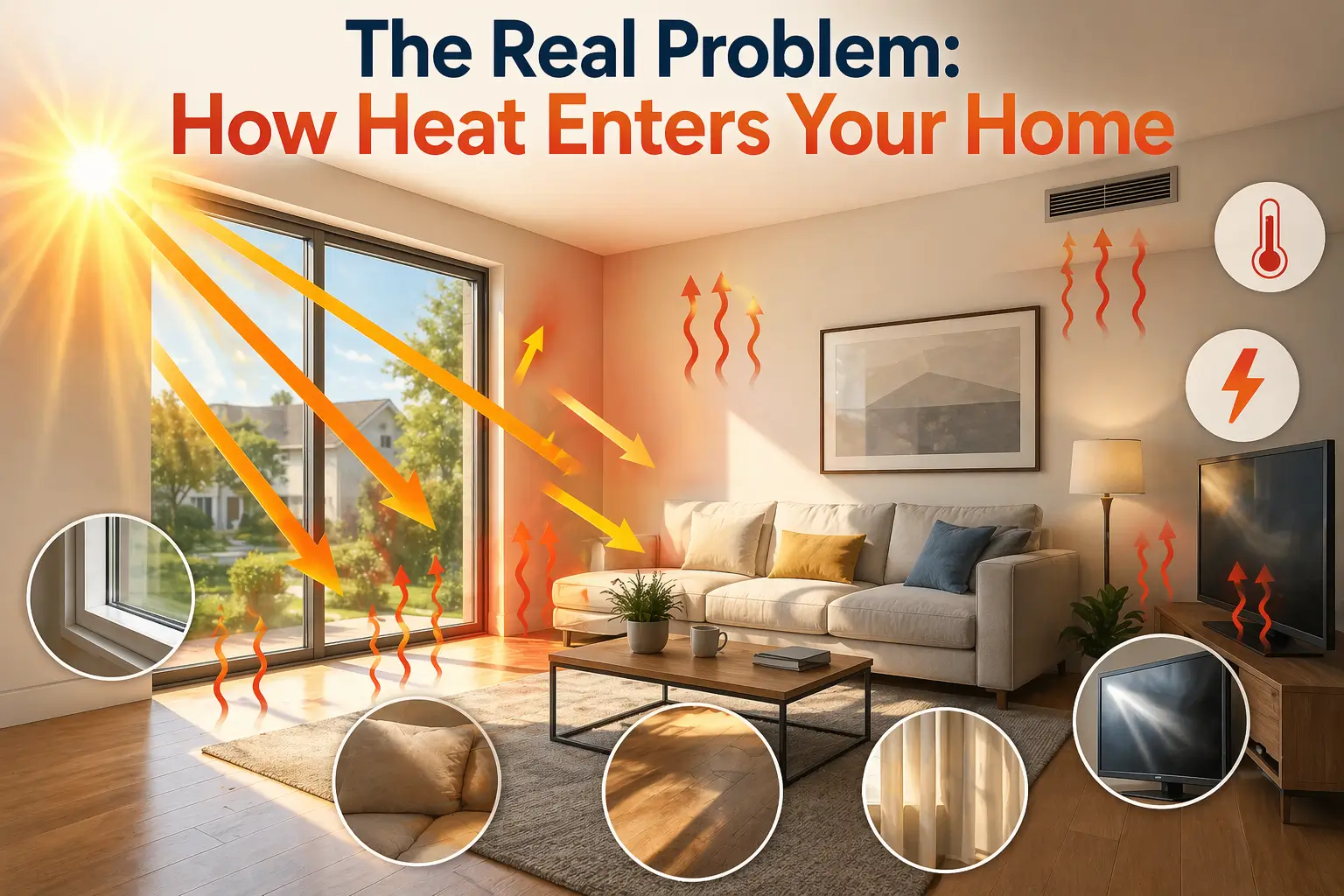
Most homeowners assume that walls and roofs are the only sources of heat, but windows play a major role in indoor temperature rise. Sunlight entering through untreated glass turns into heat once it reaches interior surfaces. As a result, this process gradually increases room temperature, forcing cooling systems to work harder.
Common issues caused by heat entering through windows include:
- Direct sunlight increasing indoor temperatures during peak hours
- Continuous AC usage leading to higher electricity consumption
- Uneven cooling, where some rooms stay hotter than others
- Glare that affects screens, comfort, and visibility
- Fading of furniture, flooring, and curtains due to UV exposure
Why Traditional Solutions Fall Short
Homeowners often try basic methods to control heat, but most of them only offer partial relief, unlike energy saving window film, which addresses heat gain more effectively at the source.
- Curtains and blinds block sunlight but do not stop heat transfer through glass
- Heavy drapes reduce natural light, making rooms feel darker and less open
- Replacing windows is costly and involves major renovation work
- Double glazing or new installations require time, planning, and high investment
- Air conditioners compensate for heat but significantly increase monthly bills
- Temporary fixes do not address the root cause of solar heat gain
These solutions either lack efficiency or require substantial changes, making them less practical for everyday use.
What Home Window Tinting Actually Does
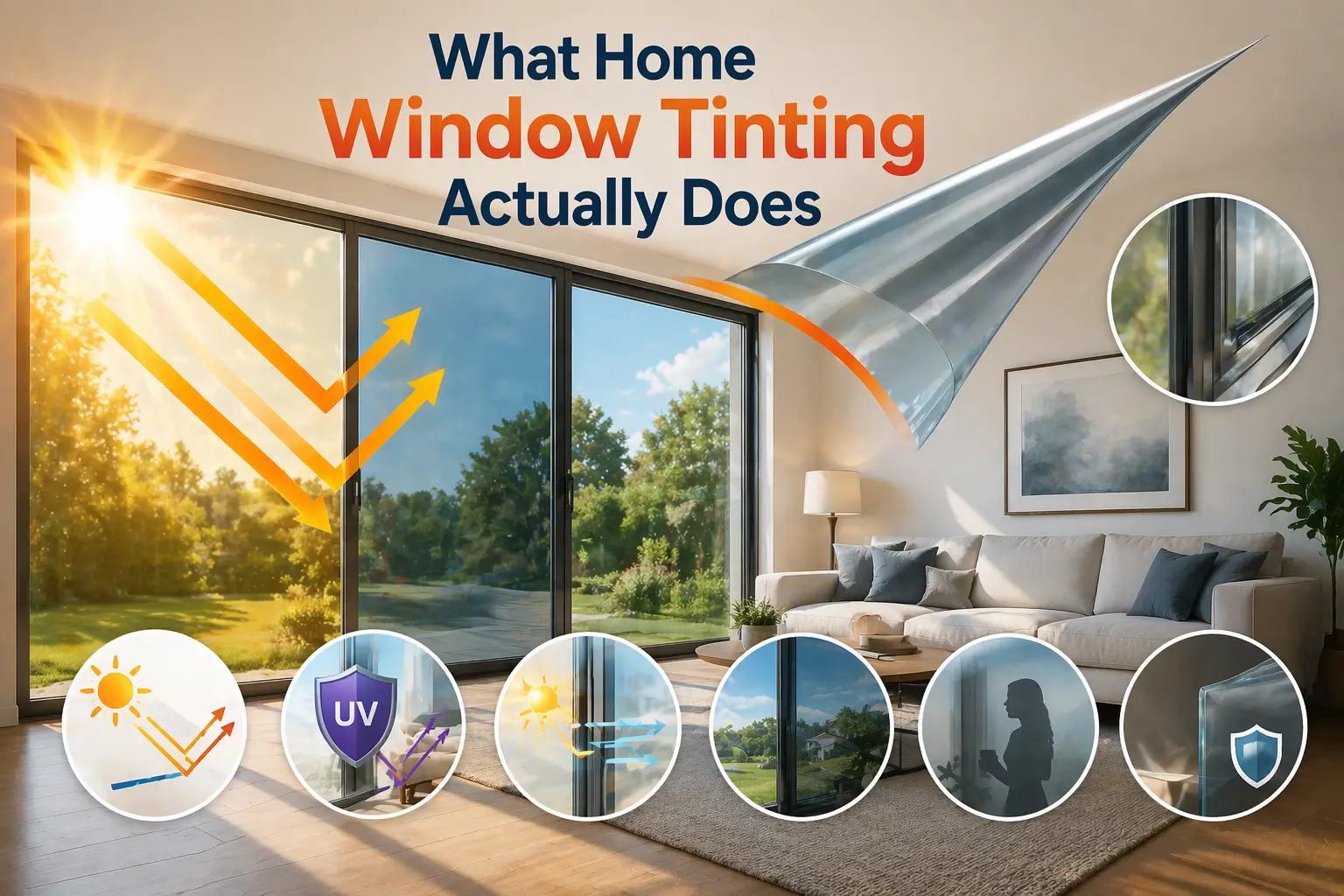
- Reduces solar heat entering through glass by reflecting and absorbing energy
- Blocks a significant percentage of harmful UV rays that damage interiors
- Minimizes glare while still allowing natural light into the room
- Maintains outdoor visibility without making windows overly dark
- Enhances privacy during daytime without heavy coverings
- Adds a protective layer to glass, improving durability
This makes it a functional and non-invasive solution for improving indoor comfort.
How Home Window Tinting Reduces Cooling Costs
The primary advantage of residential window tinting lies in controlling heat at the entry point. When less heat enters a home, the air conditioning system does not need to work as hard.
- Reduces indoor heat buildup, lowering overall room temperature
- Helps air conditioners cool spaces faster and more efficiently
- Decreases the frequency and duration of AC cycles
- Improves temperature balance across different rooms
- Lowers overall electricity usage over time
By reducing the workload on cooling systems, homeowners often notice a gradual decrease in monthly energy bills.
Key Benefits Beyond Energy Savings
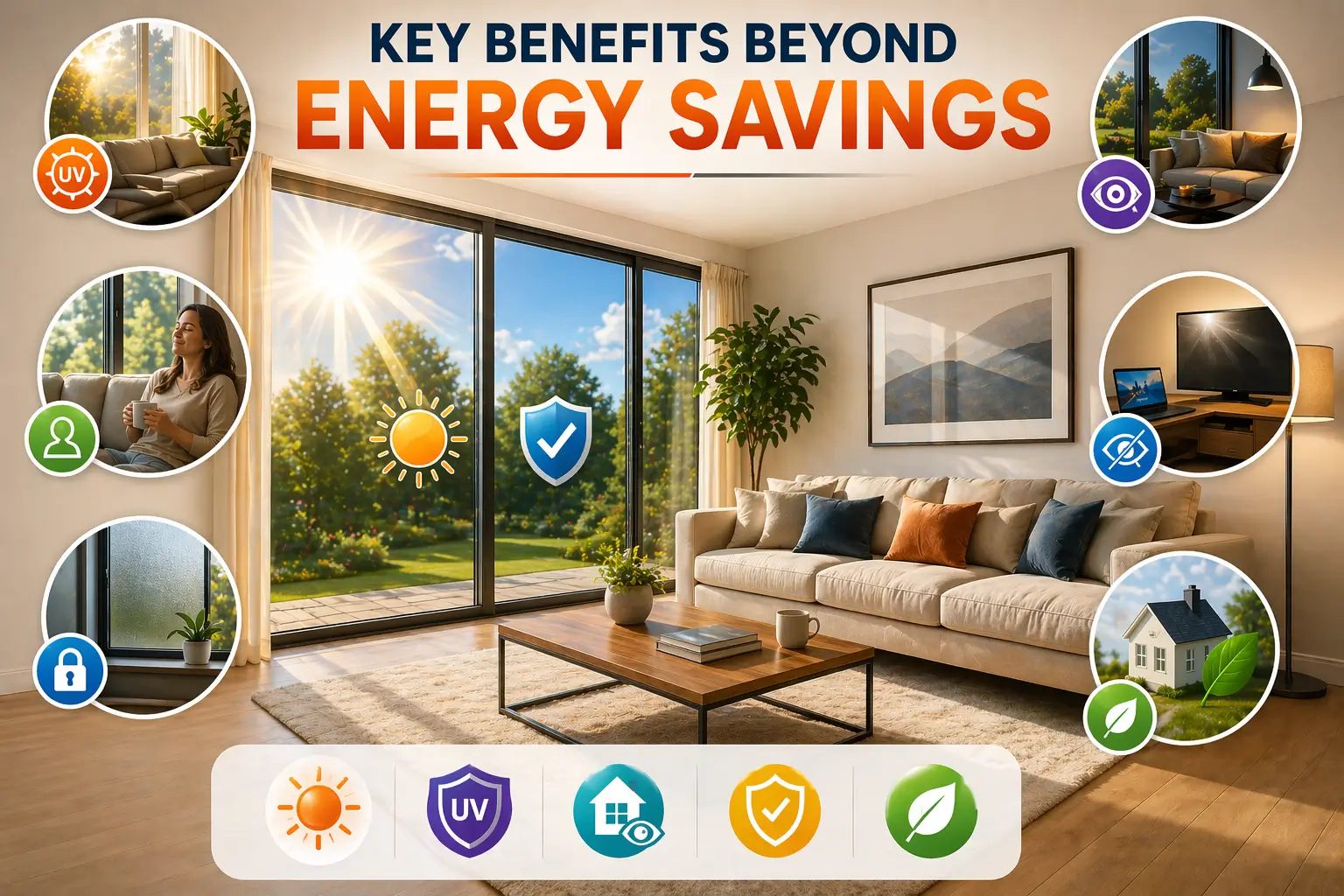
Home window tinting offers several advantages that go well beyond reducing cooling costs.
Protection from UV Damage
Improved Indoor Comfort
Privacy window film reduces harsh sunlight and excessive brightness, making living spaces more comfortable throughout the day.
Daytime Privacy Enhancement
Allows natural light to enter while limiting outside visibility, offering better privacy during daylight hours.
Better Visual Balance Indoors
Home window tinting creates a more even lighting environment, reducing overly bright or washed-out areas inside the home.
Reduced Eye Strain
Makes screen use easier and more comfortable by cutting down glare on TVs, laptops, and mobile devices.
Support for Energy-Efficient Living
House window tint encourages reduced dependence on air conditioning and contributes to a more energy-conscious home environment.
These combined advantages make window tinting a practical, long-term home improvement rather than a short-term seasonal solution.
Is It Worth It for Homeowners?
Over time, the reduction in energy consumption, improved comfort, and protection of interiors make it a cost-effective upgrade. It is especially valuable in regions with strong sunlight and long cooling seasons, where air conditioning remains a daily necessity.
Reach out today to get the right film options for your home!
FAQs
1. Does home window tinting really reduce electricity bills?
Yes, it reduces heat entering your home, which lowers AC usage and energy consumption over time.
2. Will window tinting make my home too dark?
No, modern films are designed to reduce heat and glare while maintaining natural daylight.
3. How long does home window tinting last?
High-quality safety window films can last for many years with proper installation and minimal maintenance.
4. Can window tinting be applied to existing windows?
Yes, it is installed directly on existing glass without replacing or modifying windows.
5. Does window tinting protect furniture and interiors?
Yes, it blocks UV rays that cause fading and damage to furniture, flooring, and decor.
6. Is professional installation necessary?
Professional installation ensures proper application, better performance, and longer-lasting results.