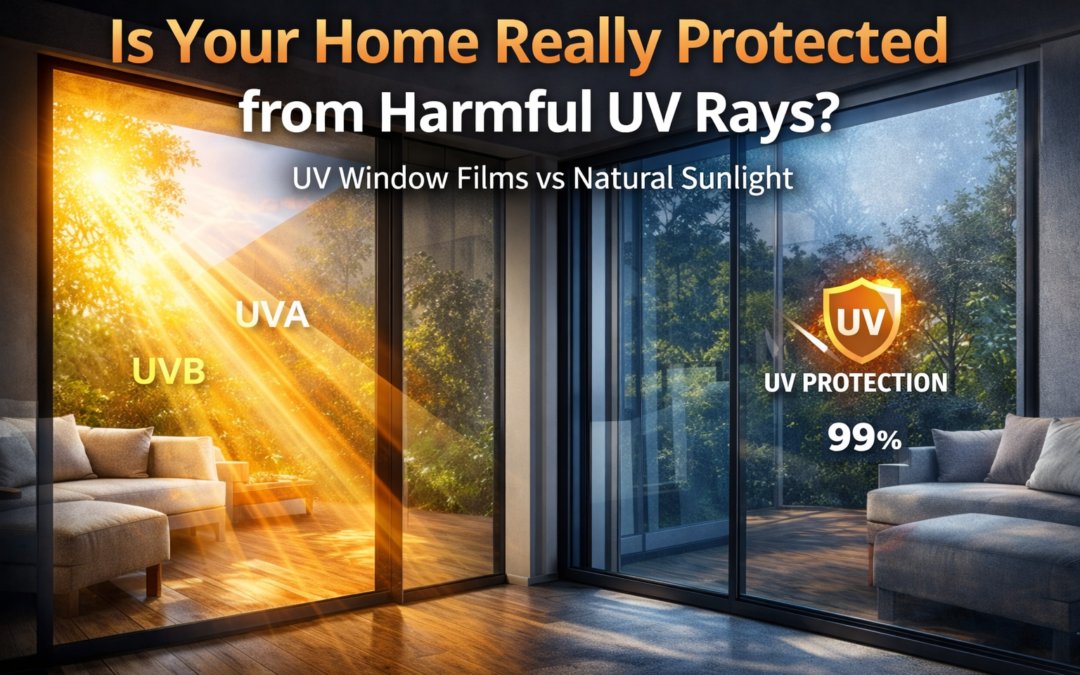
Sunlight drifting through your windows often feels like a natural comfort, bright, warm, and welcoming. It lights up your living spaces and creates an inviting atmosphere. Yet, behind that soft glow, something less visible quietly makes its way indoors: harmful ultraviolet (UV) rays, making window film an important consideration.
Many homeowners assume their walls and windows act as a complete shield. In reality, that protection is often incomplete without UV window films. Over time, this unnoticed exposure can affect not only your interiors but also your comfort and well-being. So, the question becomes worth asking, how protected is your home, really?
What Are UV Rays and Why Should You Care?
Ultraviolet rays are a form of energy emitted by the sun. While they are invisible to the human eye, their effects are far from subtle. There are two primary types to consider:
- UVA rays, which penetrate deeply and are responsible for long-term damage like fading and skin aging.
- UVB rays, which are more intense but are mostly blocked by standard glass.
The catch lies with UVA rays. These can pass through untreated windows with surprising ease, quietly entering your home day after day. That consistent exposure is what gradually leads to damage you may not notice until it becomes obvious.
The Surprising Ways UV Rays Affect Your Home
1. Fading Furniture and Interiors
Sunlight may seem harmless, but over time, UV rays gradually strip color from fabrics, wood, and decor, making UV Window film for home a practical way to preserve their original look.
2. Increased Indoor Heat
Natural light brings warmth, but unchecked sunlight can cause heat to build up inside your home. This often leads to discomfort and increased reliance on air conditioning, raising energy costs.
3. Potential Health Concerns
UV exposure isn’t limited to the outdoors, UVA rays can pass through windows and reach your skin indoors. With repeated exposure, this can contribute to long-term skin damage without you even realizing it.
Think You’re Safe Indoors? Here’s the Reality
A common belief is that once you step inside, you’re fully protected from the sun’s harmful effects. While it’s true that windows block a portion of UV radiation, they don’t eliminate it entirely, this is where UV window film becomes essential. Standard glass can still allow a significant amount of UVA rays to pass through.
This means your home, despite feeling like a safe haven, may still be exposed to the very elements you’re trying to avoid outdoors.
Simple Solutions to Block Harmful UV Rays
1. Window Coverings (Temporary Fix)
Curtains, blinds, and shades can offer a degree of protection by physically blocking sunlight. They are easy to install and can reduce glare and heat to some extent. However, they also limit natural light and don’t always provide consistent protection throughout the day.
2. UV-Blocking Window Films (Long-Term Solution)
UV protection window film provides a more effective and lasting solution. Applied directly to the glass, these films work continuously without requiring adjustment.
They can block up to 99% of harmful UV rays while still allowing natural light to pass through. In addition, they help reduce heat, minimize glare, and enhance privacy, all without changing the look of your windows drastically.
Why Home Window Tinting for UV Protection Is a Smart Investment
- Long-Term Protection for Interiors
Window tinting helps preserve the original color and condition of your furniture, flooring, and decor, extending their lifespan. - Improved Energy Efficiency
By reducing heat gain, it lessens the strain on your cooling system. This often translates into more stable indoor temperatures and lower energy costs over time. - Enhanced Comfort
Rooms feel noticeably cooler and more balanced, even during peak sunlight hours with UV window films. It creates a living space that feels consistently comfortable. - Glare Reduction Without Losing Light
You can enjoy natural daylight without the discomfort of harsh glare on screens or reflective surfaces. - Added Privacy and Security
Certain UV Window films for home limit visibility from the outside, offering a sense of privacy without making your interiors feel closed off. - Low Maintenance Solution
Once installed, window films require minimal upkeep, making them a practical addition to any home.
Choosing the Right Solution for Your Home
- Understand Your Priorities
Whether your focus is reducing heat, improving privacy, block UV rays from windows, or protecting interiors, identifying your main goal helps narrow down the right option. - Explore Film Variations
Not all window films are the same. Some are designed specifically for energy efficiency, while others focus on aesthetics or security. - Consider Professional Installation
A proper installation ensures the film performs as intended. It also prevents issues like bubbling or peeling over time. - Balance Budget and Benefits
While initial costs of UV window films may vary, it’s important to look at long-term value, including energy savings and reduced interior damage. - Seek Expert Guidance
Consulting experienced professionals can make the selection process smoother and more effective.
Final Thoughts
UV protection within your home is often overlooked, yet its impact quietly builds over time. From faded interiors to rising indoor heat, the signs are easy to miss until they become difficult to ignore.
Investing in the right solution not only protects your home but also enhances everyday comfort. If you’re considering a reliable and lasting upgrade, All Spec Sun Control offers professional home window tinting for UV protection designed to meet your specific needs. With expert guidance and high-quality materials, creating a more comfortable and protected living space becomes a seamless experience.
Schedule a consultation!
FAQs
1. Do regular windows block UV rays completely?
No, standard windows block most UVB rays but still allow a significant amount of UVA rays to pass through.
2. Can window tinting really reduce energy bills?
Yes, by minimizing heat gain, window films can help reduce the need for constant air conditioning.
3. Will window tinting make my home too dark?
Modern UV window films are designed to maintain natural light while reducing glare and heat.
4. How long does window film last?
High-quality films can last many years, especially when professionally installed.
5. Is window tinting suitable for both homes and offices?
Absolutely, it works effectively in residential and commercial spaces alike.