
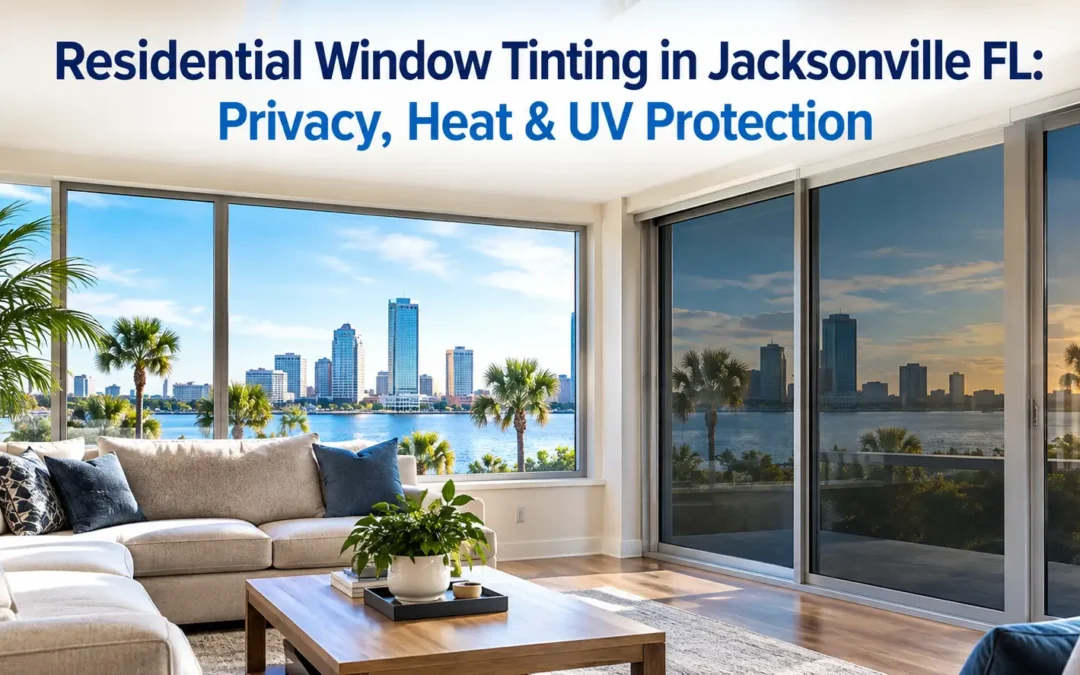
What if your windows are letting in more than sunlight? In a Jacksonville home, the same glass that fills a room with natural light can also bring in unwanted heat, harsh glare, UV exposure, and less privacy. By afternoon, a bright room can become uncomfortable, while furniture and flooring continue taking the impact of daily sun exposure.
Home window tinting services can help address these issues without replacing the existing glass. The right film can reduce solar heat and glare, block a high percentage of UV rays, and improve daytime privacy while preserving natural light. The key is choosing a film based on the window, its location, and the problem you want to solve.
What Does Residential Window Tinting Do?
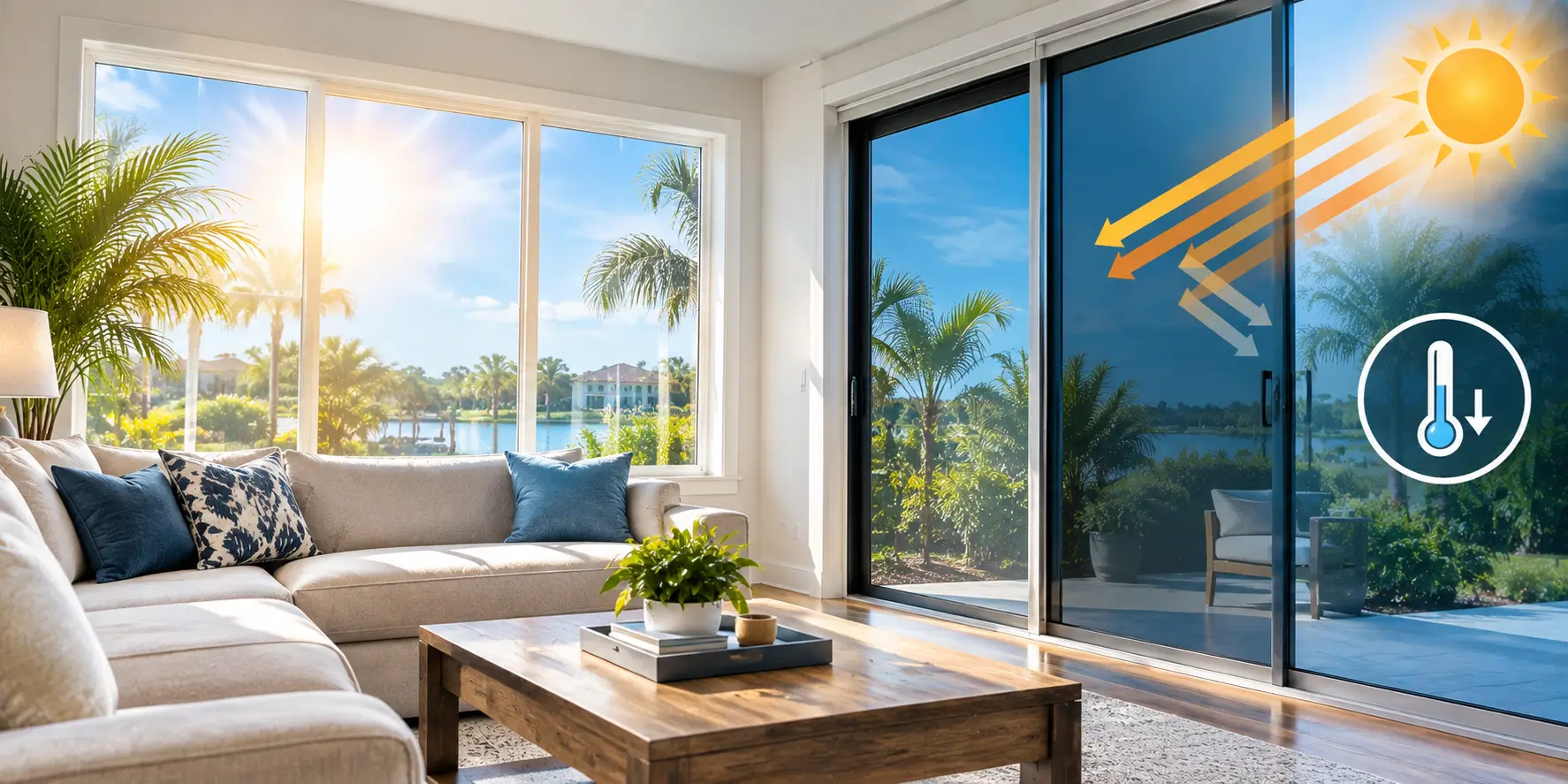
Residential window tinting involves applying a thin film to the interior surface of existing glass. Different films are designed for different purposes.
Some focus on solar heat and glare. Others provide privacy or decorative effects. Safety films are designed to help hold glass together when it breaks.
For Jacksonville homeowners, home window tinting services can be useful when one or more rooms receive strong direct sunlight. The film can help manage the amount of solar energy entering through the glass without requiring a complete window replacement.
The result depends on the film selected. A film designed primarily for privacy will not necessarily provide the same solar performance as a dedicated heat-control film.
How Does Window Tinting Help With Jacksonville Heat?
Sunlight can make certain rooms much warmer than the rest of the house. This is especially noticeable around large windows, sliding glass doors, and windows exposed to strong afternoon sun.
A heat control window tint works by reducing the amount of solar energy transmitted through the glass. High-performance films can target infrared energy while maintaining substantial visible light transmission.
For example, 3M states that its Prestige Series can reject up to 97% of the sun’s infrared light and up to 60% of the heat coming through windows, depending on the specific product and glass. The infrared figure should not be confused with total heat rejection.
This is why choosing a film based only on how dark it looks can be misleading. A darker film is not automatically a better heat-control solution.
Which Windows Get the Most Heat?
Start with the windows that create the biggest comfort problems. These may include:
- West-facing windows exposed to afternoon sun.
- Large living-room windows.
- Sliding glass doors.
- Windows near televisions and computer screens.
- Bedrooms that become noticeably warmer during the day.
A targeted installation can address problem areas first. Homeowners can then decide whether additional windows need treatment.
Can Window Film Protect Your Home From UV Rays?
Yes. Quality window films can significantly reduce UV transmission through treated glass.
UV exposure can contribute to fading and deterioration of furniture, flooring, rugs, artwork, and fabrics. This makes UV protection useful even when a room does not have a noticeable heat problem.
A high-quality UV protection window film can block a very high percentage of harmful UV radiation. All Spec states that its premium films can block up to 99.9% of damaging UV rays, depending on the product.
This does not mean the room becomes dark. Some films are designed to reject UV and infrared energy while maintaining a high level of visible light.
When comparing the best UV blocking window film, check the manufacturer’s published UV rejection figure rather than choosing based on appearance alone.
What Is the Best UV Window Film for Home?
There is no single film that is right for every home. The best UV window film for home use depends on the glass, desired appearance, heat-control needs, and budget.
For homeowners who want strong UV protection without significantly changing the appearance of their windows, high-performance spectrally selective films can be useful.
3M Prestige is one example. All Spec lists the series with a 15+ year lifespan and lifetime warranty.
The important point is to compare actual specifications. Look at UV rejection, visible light transmission, solar performance, warranty, and glass compatibility.
Does Residential Window Tinting Provide Privacy?
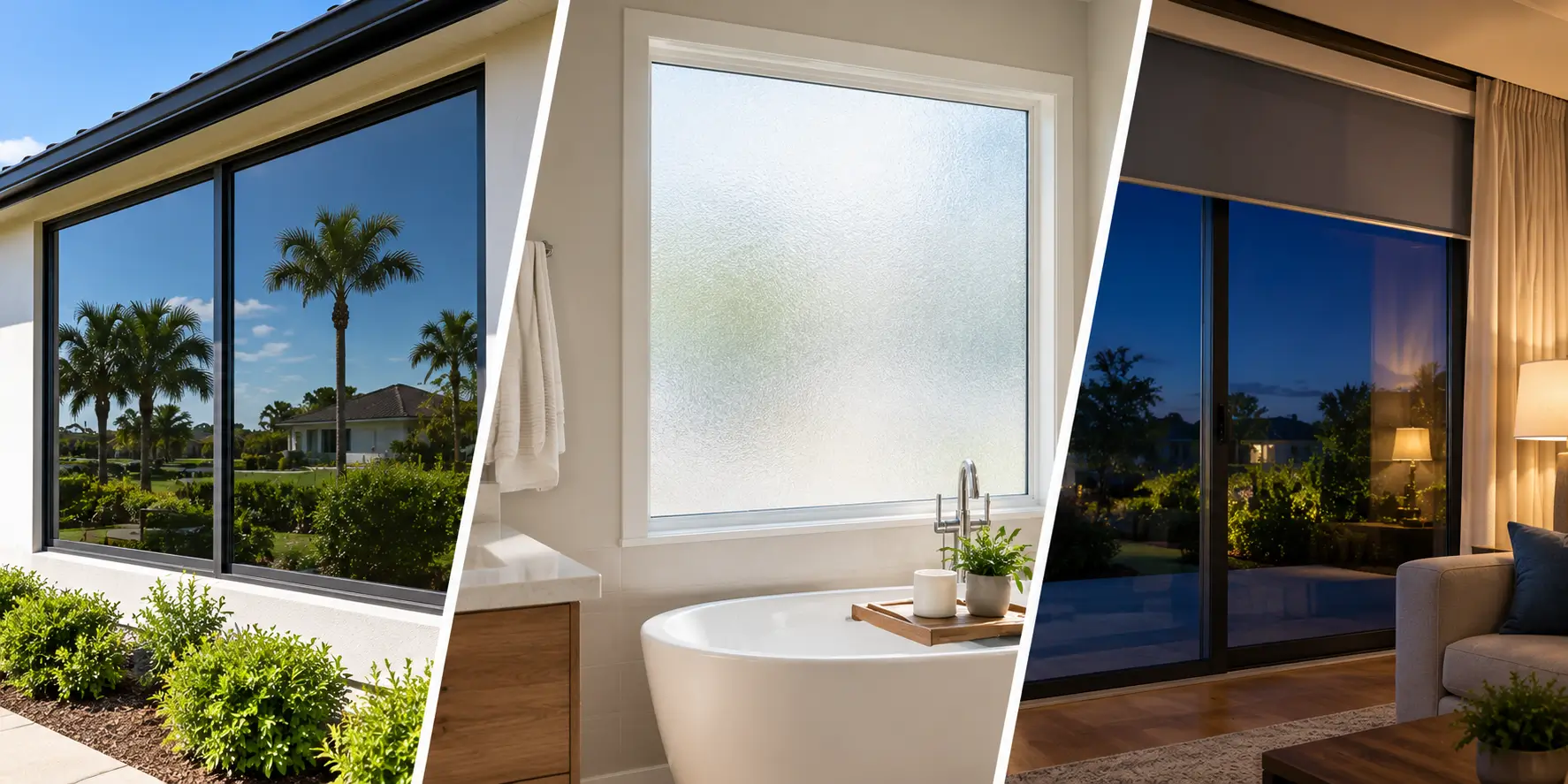
Privacy depends heavily on the type of film and the lighting conditions.
Reflective films can provide strong daytime privacy because the brighter outdoor side reflects more light. This can make the exterior surface appear more reflective while allowing people inside to maintain an outward view.
However, this effect changes after dark.
When interior lights are brighter than the outside, reflective film does not provide the same one-way privacy effect. All Spec specifically notes that reflective privacy film should not be treated as complete nighttime privacy.
This is an important consideration when choosing home tinting for privacy.
If a bathroom, bedroom, entryway, or another room needs privacy both day and night, frosted or decorative options may be more appropriate.
How Do You Choose the Right Film for Privacy?
Choose a film based on the level of privacy you need, the amount of natural light you want, and whether privacy is required during the day, night, or both.
1. Daytime Privacy
Reflective films can reduce visibility into the home during brighter outdoor conditions. They can be useful for street-facing windows and rooms where daytime privacy is the main concern.
2. Bathroom and Interior Privacy
Decorative or frosted films can obscure views without relying on outdoor lighting conditions. They can also add a finished appearance to plain glass.
3. Nighttime Privacy
If nighttime privacy is important, do not assume a reflective film will provide the same protection after sunset. Curtains, blinds, frosted film, or another privacy solution may still be necessary.
A privacy window film should therefore be selected according to the room’s actual privacy requirements, not simply because it looks mirrored or dark.
Which Film Should You Choose for Heat, Privacy or UV Protection?
Choose the film based on your main concern. Solar-control films help with heat, privacy films improve visibility control, and UV-blocking films help protect interiors from harmful UV rays.
| Your Main Concern | Film Feature to Look For | Common Application |
|---|---|---|
| Excessive heat | Solar control | Sunny living rooms |
| Glare | Glare reduction | TVs and home offices |
| UV exposure | High UV rejection | Rooms with furnishings |
| Daytime privacy | Privacy/reflective finish | Street-facing windows |
| Privacy + appearance | Decorative finish | Bathrooms and entry areas |
The best home window tint is therefore not necessarily the darkest film or the most expensive option. It should match the window’s exposure and your primary goal.
For some homes, a single film type may not make sense for every window. Different rooms can have different requirements.
Where Should You Install Window Film First?
You do not always need to tint every window at once. Start with the windows that cause the most noticeable problems.
For heat, look at windows receiving strong direct sunlight. For privacy, focus on street-facing or closely overlooked windows. For UV concerns, prioritize rooms with furniture, artwork, rugs, or flooring that receive prolonged sunlight.
This targeted approach can make home window tinting services more practical for homeowners who want to address specific problem areas before treating the entire property.
Large glass doors and expansive windows can also deserve attention because they provide a larger surface for sunlight to enter.
Can Window Tint Reduce Heat Without Making a Home Too Dark?
It can, depending on the film. Modern films are not all designed to simply darken glass. Some are engineered to reduce infrared energy and UV exposure while allowing substantial visible light to pass through.
This is one reason film specifications matter.
Visible Light Transmission, or VLT, indicates how much visible light passes through the film. A lower VLT generally means a darker appearance. Heat rejection is a separate performance consideration.
A homeowner looking for heat reducing window film should therefore compare actual performance data rather than judging a product by shade alone.
Can Window Film Be Installed on Existing Windows?
In many cases, yes. Window film is designed to be applied to existing glass, which means homeowners do not necessarily need to replace their windows to add solar, privacy, or UV-control features.
However, film compatibility still matters.
Double-pane and triple-pane windows should be assessed before installation. All Spec states that modern films can be installed on insulated glass units, but the appropriate film should be selected for the specific glass.
This is one reason professional assessment is useful before choosing a window tint for home.
The installer can evaluate the glass, window orientation, and intended use before recommending a product.
What Happens During Residential Window Tinting?
Professional installation generally starts with an assessment of the windows and the homeowner’s goals.
The process typically involves:
- Reviewing the home’s windows and glass.
- Identifying heat, privacy, glare, or UV concerns.
- Measuring the glass.
- Selecting an appropriate film.
- Cleaning and preparing the glass.
- Applying the film carefully.
- Allowing the film to cure.
- Inspecting the finished installation.
Freshly installed film may show temporary haze or small water pockets. These can disappear as the film cures. All Spec notes that full clarity can take up to 30 days depending on conditions.
This curing period is normal and should be considered when planning an installation.
How Much Does Residential Window Tinting Cost in Jacksonville?
The cost depends on the amount of glass, film selected, window design, and installation requirements.
Current All Spec pricing information places Jacksonville residential installations at roughly $5 to $20 per square foot installed, depending on the project and film. Its current local guide reports many standard projects around $596 to $840, while premium installations can cost more. These are planning figures rather than guaranteed quotes.
A small project with difficult-to-access windows can have a different effective cost per square foot than a larger installation with straightforward access.
For this reason, comparing only the advertised price per square foot may not give you a complete picture.
The actual home window tinting services cost should be based on the measured glass area, selected film, and installation requirements.
How Long Does Residential Window Film Last?
Lifespan depends on the film, glass, exposure, and installation quality. Premium products can provide long-term performance when correctly selected and installed. For example, All Spec lists 3M Prestige with a 15+ year lifespan and lifetime warranty.
Warranty terms can vary by product, so homeowners should check the specific film rather than assuming every window film has the same coverage.
Professional installation also matters. Proper glass preparation and application can affect the finished appearance and long-term performance.
Are Safety and Security Films Different From Solar Films?
Yes. Safety and security window films have a different primary purpose. Solar-control films focus on heat, glare, and solar energy. Safety and security films are thicker and are designed to help hold broken glass together after impact.
All Spec explains that security film can help contain glass shards and slow forced entry, but it is not equivalent to laminated or impact-rated glass.
This distinction matters in Jacksonville. A homeowner looking for additional protection should understand what the film is designed to do rather than treating all window films as interchangeable.
What Should You Check Before Choosing Home Window Film?
Before selecting a product, consider these questions:
- Is heat the main problem?
- Is daytime or nighttime privacy more important?
- How much natural light do you want to keep?
- Are UV rays a concern for furniture and flooring?
- What type of glass do you have?
- Do you need decorative or safety features?
- What warranty comes with the film?
- Who will install it?
- What curing period should you expect?
These questions make it easier to compare products based on performance instead of appearance alone.
A good home window film should solve the specific problem you are experiencing without creating a new one.
Why Choose All Spec Sun Control for Residential Window Tinting?
All Spec Sun Control is a family-owned Jacksonville window film company with more than 40 years of experience. The company provides residential solutions for solar control, privacy, UV protection, decorative applications, and safety/security needs.
All Spec is also an authorized 3M Prestige dealer. Its residential services include professional installation and warranty support.
For homeowners comparing residential window tinting Jacksonville, the important consideration is not simply the film itself. The installation company should understand the glass, window orientation, desired appearance, and performance goals.
Final Thoughts
The right film can help Jacksonville homeowners manage heat, glare, UV exposure, and privacy without replacing existing glass.
When comparing home window tinting services, look beyond price and darkness. Consider heat control, UV rejection, light transmission, privacy, warranty, and glass compatibility.
If you are considering residential window tinting Jacksonville, All Spec Sun Control can assess your windows and recommend a solution based on your home’s needs.
For homes with excessive heat, glare, fading, or privacy concerns, home window tinting services can be a practical upgrade.
FAQs
1. Does residential window tinting reduce heat in Jacksonville homes?
Yes. Solar-control films can reduce solar energy entering through treated glass. Performance varies by film, glass type, window orientation, and installation.
2. Does window film block UV rays?
Yes. High-quality films can block a very high percentage of UV radiation. Some premium films are rated to reject up to 99.9% of damaging UV rays.
3. Does window tint provide privacy at night?
Not always. Reflective privacy film depends on outdoor light being brighter than indoor light, so nighttime privacy may require another solution.
4. Will window tint make my home darker?
Not necessarily. Some films are designed to reject infrared and UV energy while maintaining substantial visible light transmission.
5. Which windows should I tint first?
Start with windows causing the most heat, glare, privacy, or UV concerns. Large sun-facing windows and sliding glass doors are common priorities.
6. Can window film be installed on double-pane windows?
Yes, compatible films can be installed on insulated glass units. However, the glass and film should be assessed before installation.
7. How long does residential window film last?
Lifespan varies by product and conditions. All Spec lists 3M Prestige with a 15+ year lifespan and lifetime warranty.
8. How long does window film take to cure?
The curing period varies with conditions. All Spec notes that residential installations can take up to 30 days to reach full clarity.
9. How much does residential window tinting cost in Jacksonville?
Current All Spec estimates place residential installations around $5 to $20 per square foot installed, depending on the film and project.
10. Can window film protect furniture from sun damage?
Yes. UV-blocking films can reduce UV exposure through treated glass, helping limit fading and deterioration of interior furnishings.