
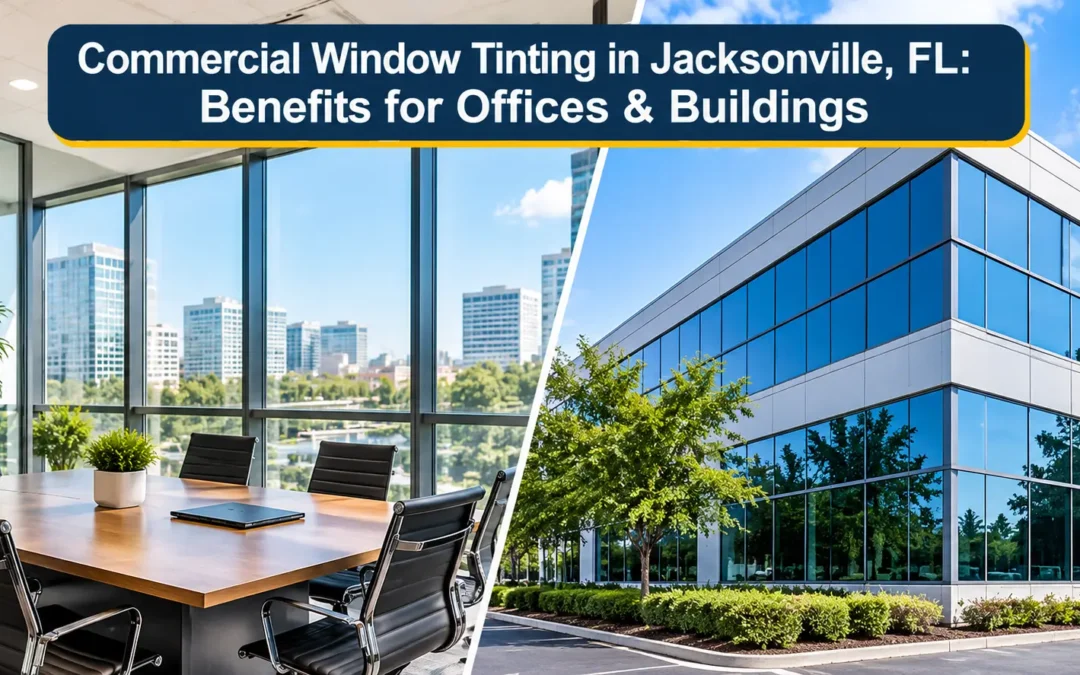
Does sunlight make it difficult for employees to work near office windows? Do meeting room screens become hard to see during afternoon presentations? In commercial buildings with large glass windows, these problems can affect everyday operations. Commercial window film can help reduce excessive sunlight, glare, and indoor heat, creating a more comfortable working environment.
Strong sunlight can increase indoor temperatures, create uncomfortable glare, and place additional demand on air conditioning systems. It can also expose office furniture, flooring, and displays to prolonged UV radiation. For businesses in Jacksonville, managing these issues is important for maintaining a comfortable and functional workspace.
Commercial window tinting Jacksonville offers a practical solution for improving existing glass without replacing the windows. The right window film can help control heat, reduce glare, protect interiors, and provide privacy in selected areas.
Why Do Jacksonville Offices and Commercial Buildings Need Window Tinting?
Many modern offices use large windows to bring natural light into workspaces. While this creates an open and welcoming environment, extensive glass surfaces can also allow significant solar heat and sunlight to enter.
The effects are often noticeable during working hours. Employees sitting near windows may experience more heat than those working farther inside. Bright reflections can make computer screens difficult to view, while conference room displays may become uncomfortable to use.
These problems can also increase reliance on air conditioning. Businesses with large glass facades may need better sunlight management to maintain comfortable indoor conditions.
This is where office window tinting becomes useful. It helps businesses manage the effects of direct sunlight while retaining the benefits of natural daylight.
How Does Commercial Window Tinting Benefit Offices and Buildings?
1. Reduces Heat Around Office Workstations
Workstations located near exterior windows can become uncomfortable when direct sunlight enters the building. Employees may experience excessive warmth even when the air conditioning is running.
Window film helps reduce solar heat entering through glass. This can limit hot spots near windows and support a more balanced indoor temperature.
For businesses with large office windows, commercial window tinting can make work areas more comfortable without requiring changes to the existing glass.
2. Reduces Glare on Computer Screens and Office Equipment
Glare is more than a minor inconvenience in a modern workplace. It can make computer screens difficult to read, affect video presentations, and create reflections on digital displays.
Employees may have to adjust their monitors, close blinds, or move away from windows to avoid direct sunlight. These small disruptions can make everyday tasks less comfortable.
Office window tinting helps reduce excessive brightness and reflections while allowing natural light to enter. This can make workstations, meeting rooms, and presentation areas easier to use.
3. Helps Manage Commercial Cooling Costs
Large glass windows can contribute to solar heat gain inside commercial buildings. As indoor temperatures rise, air conditioning systems may need to work harder to maintain the desired conditions.
A suitable commercial window tint helps reduce the amount of solar heat entering through windows. This may lower cooling demand and support better energy efficiency.
However, actual savings depend on several factors, including the building’s glass type, window orientation, insulation, HVAC system, and selected film.
For businesses looking to improve existing windows without a major renovation, solar control film can be a practical option.
4. Protects Office Interiors from UV Exposure
Office furniture, carpets, flooring, curtains, and display materials can gradually fade when exposed to sunlight for long periods.
This is particularly relevant in reception areas, meeting rooms, and workspaces with large windows. Furniture placed near glass surfaces may show visible fading over time.
Quality window films can block up to 99% of UV rays, depending on the product specifications. This helps reduce UV exposure and protect interior materials.
For businesses investing in office interiors, commercial window tinting Jacksonville can provide an additional layer of protection against sun-related damage.
5. Improves Privacy in Meeting Rooms and Glass Partitions
Glass meeting rooms and internal partitions create an open office layout. However, they can also make private discussions and confidential work more visible to others.
Frosted and decorative window films offer a practical way to improve privacy without replacing the glass. They can be applied to conference room partitions, executive offices, consultation spaces, and selected interior doors.
Reflective films may also reduce outside visibility during daylight hours. However, their privacy effect depends on lighting conditions and may reverse at night when indoor lights are on.
The right film depends on whether a business needs partial privacy, full visual screening, or simply a decorative finish.
6. Enhances the Appearance of Commercial Buildings
The appearance of a commercial property can influence how customers, visitors, and business partners perceive it. Different window finishes can help create a more consistent and professional exterior.
Reflective films offer a sleek appearance, while decorative films can add patterns, branding elements, or frosted sections to glass surfaces.
Businesses can also use window film to create visual consistency across office entrances, meeting rooms, and glass partitions. This allows them to update existing windows without undertaking a major renovation.
Which Areas of a Commercial Building Can Benefit from Window Film?
Different areas of a commercial property have different requirements. Selecting film according to how each space is used can improve its overall performance.
- Office Workstations: Solar control films can help reduce heat and glare for employees working near windows.
- Conference Rooms: Frosted or decorative films can provide privacy during meetings and presentations.
- Reception Areas: Window films can help manage direct sunlight while maintaining a welcoming appearance.
- Storefronts: Solar control films can reduce glare and help protect merchandise displayed near windows.
- Glass Partitions: Decorative and privacy films can create visual separation without blocking all natural light.
- Large Glass Facades: Solar control films can help manage heat entering through extensive glass surfaces.
For properties with different types of spaces, a combination of film solutions may be more suitable than using the same product throughout the building.
Which Commercial Window Film Should a Business Choose?
The right film depends on the building’s main concerns, including heat, glare, privacy, and safety. Here are some common options:
- Solar Control Window Film: Helps reduce solar heat gain and glare in sun-exposed areas.
- Reflective Solar Film: Reduces solar heat while creating a reflective exterior appearance.
- 3M Prestige Solar Film: Offers solar control and UV protection with high visible light transmission and relatively low reflectivity.
- Decorative Window Film: Adds patterns, textures, or frosted finishes to glass doors and partitions.
- Privacy Window Film: Reduces visibility into selected office areas, depending on the product.
- Safety and Security Window Film: Helps hold broken glass fragments together if the glass is damaged.
Businesses considering commercial building window tinting Jacksonville should assess their existing glass and specific requirements before selecting a product. Film performance and compatibility can vary depending on the window system.
Commercial Window Tinting vs. Window Replacement: Which Makes More Sense?
Replacing commercial windows can involve significant costs, planning, and disruption to business operations. Window film offers another option when existing glass is in good condition.
It can improve certain window performance characteristics without requiring businesses to remove and replace their existing glass. Installation may also be less disruptive than a full window replacement project.
However, window film cannot correct damaged seals, defective glazing, or structural problems. Buildings with these issues may need window repairs or replacement before film installation is considered.
A professional assessment can help determine whether tinting is suitable for the existing windows.
What Should Businesses Consider Before Installing Commercial Window Film?
Before choosing a film, businesses should consider how sunlight affects different areas of their property. A few important factors include:
- Primary requirement: Identify whether the main concern is heat, glare, privacy, UV exposure, or safety.
- Window orientation: Consider which windows receive direct sunlight and during what hours.
- Glass compatibility: Check the existing glass type before selecting a film.
- Visible light transmission: Decide how much natural light should pass through the windows.
- Exterior appearance: Consider reflectivity and how the selected film will look from outside.
- Warranty and installation: Review product coverage and choose experienced installers.
These considerations help businesses avoid choosing a film based only on its appearance or advertised performance.
Why Choose All Spec Sun Control for Commercial Window Tinting in Jacksonville?
Choosing the right film is only one part of improving commercial windows. Proper assessment and installation also influence the final appearance and performance.
All Spec Sun Control provides window film solutions for businesses in Jacksonville. Its services include options for solar control, privacy, decorative applications, and safety requirements.
The team can help businesses assess their existing windows and identify suitable film options based on their building layout and requirements.
If you are considering commercial building window tinting Jacksonville, professional guidance can help you select a solution that addresses your property’s specific challenges.
FAQs
1. How does commercial window tinting benefit office buildings?
Commercial window tinting helps reduce solar heat, glare, and UV exposure. It can also improve privacy and make office spaces more comfortable for employees and visitors.
2. Does commercial window film reduce heat inside offices?
Yes. Solar control films reduce the amount of solar heat entering through glass, helping manage indoor temperatures in sun-exposed areas.
3. Can office window tinting reduce glare on computer screens?
Yes. Suitable window films help reduce excessive brightness and reflections, making computer screens and digital displays more comfortable to use.
4. Does commercial window film help lower cooling costs?
It may reduce cooling demand by limiting solar heat gain. Actual energy savings depend on the building’s windows, insulation, HVAC system, and film specifications.
5. Can window film provide privacy for office conference rooms?
Yes. Frosted and decorative films can reduce visibility through glass partitions and conference room windows while maintaining a professional appearance.
6. What is the best window film for large commercial windows?
Solar control films are useful for managing heat and glare. The right product depends on glass type, sunlight exposure, visible light requirements, and business needs.
7. Can commercial window tinting be installed without closing an office?
In many cases, installation can be scheduled around business hours to limit disruption. The time required depends on the number, size, and accessibility of the windows.
8. Is commercial window film suitable for existing glass windows?
Yes. Window film is generally applied to existing glass, but compatibility should be checked before installation to ensure the selected product is suitable.