
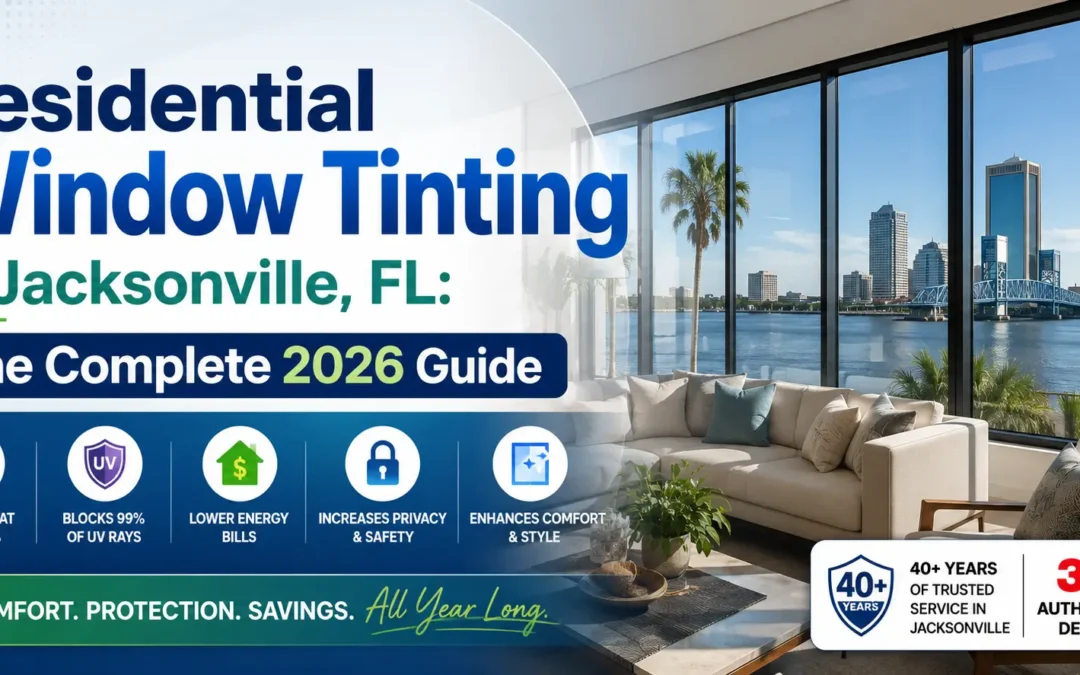
Florida is known for its sunshine, and while those golden rays are one of the state’s biggest draws, they can also create uncomfortable and costly challenges inside the home. Rising indoor temperatures, relentless glare, fading furniture, and sky-high cooling bills are all too common for Jacksonville homeowners, especially in homes with large west- or south-facing windows.
What Is Residential Window Tinting?
So, what exactly is residential window tinting? At its core, it involves applying a thin, multi-layered film to the interior surface of your home’s windows. These films are designed to filter sunlight, reduce heat and UV exposure, and provide added benefits such as privacy, safety, and aesthetics.
Modern window films come in a variety of types, from clear UV-blocking films to decorative frosted options and reflective tints. Each one serves a specific purpose and can be customized to meet your home’s needs and design preferences. 3M, whose films All Spec Sun Control installs, holds the world’s first patent for sun control window film, dating back to 1966 — the underlying technology has been refined for nearly 60 years.
Whether you’re looking to make your interiors more energy-efficient or simply want to cut down the afternoon glare in your Jacksonville living room, residential window tinting offers a versatile, low-maintenance solution.
How Much Does Residential Window Tinting Cost in Jacksonville, FL?
Cost depends primarily on three things: the number and size of your windows, the type of film you select (solar control, UV-blocking, decorative, or security), and whether any old film needs to be removed first. Homes with large sliding glass doors or floor-to-ceiling windows, common in many Jacksonville and Ponte Vedra properties, will fall toward the higher end of that range.
It’s best to get a personalized quote from a local expert who can assess your specific windows, sun exposure, and goals rather than rely on a national average.
Does Window Tint Really Help With Florida Heat?
One of the most immediate and measurable benefits of window tinting is a reduction in your monthly energy costs. Florida’s warm climate means air conditioners are often working overtime. Tinted windows can block up to 79% of solar heat, significantly reducing the strain on your cooling system.
As a result, your home stays cooler naturally, and your HVAC unit doesn’t have to run as frequently, leading to long-term savings on utility bills.
Can Window Film Protect Furniture and Flooring From Sun Damage?
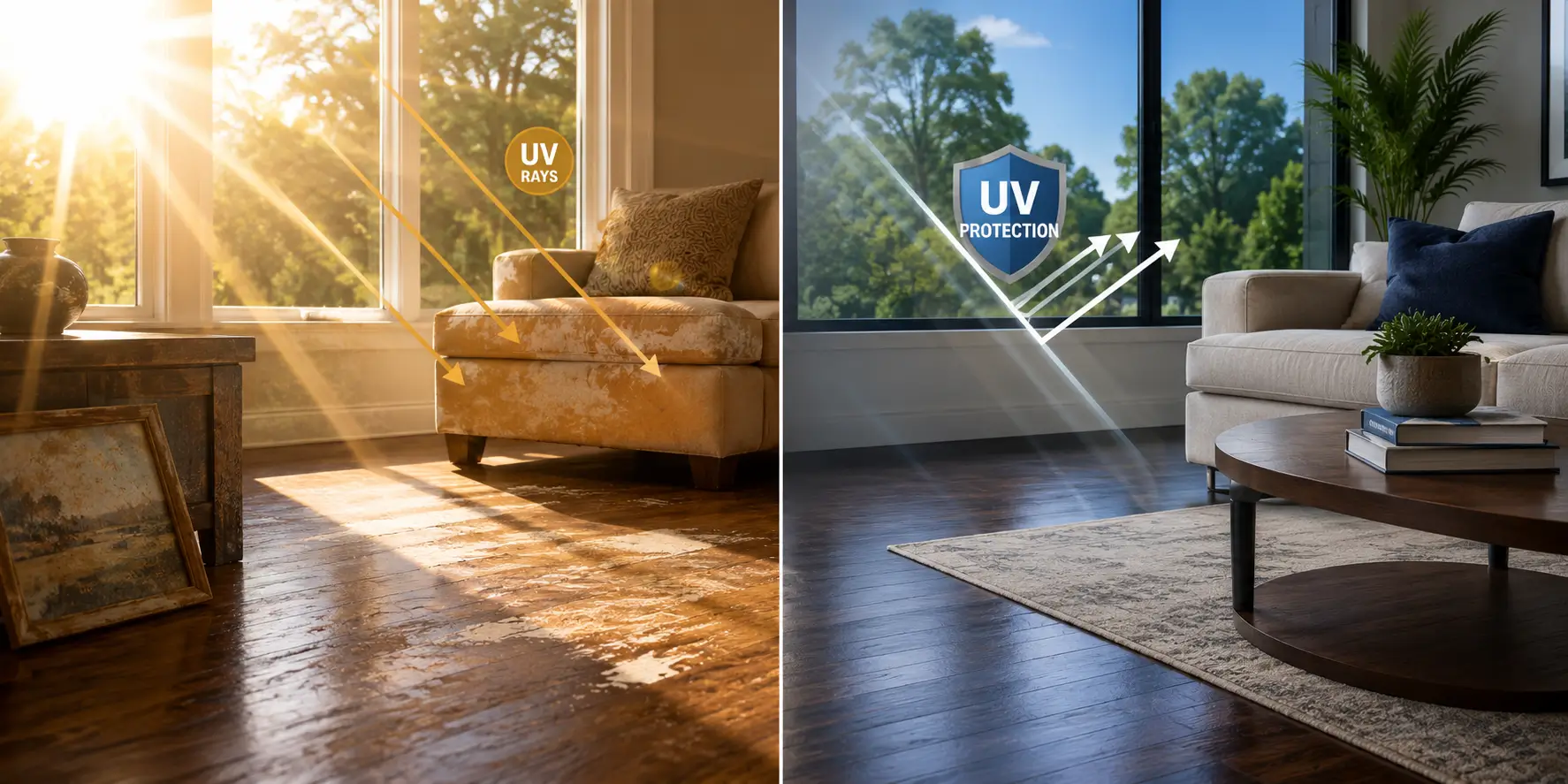
The same UV rays that cause sunburn can also damage your interiors. Over time, exposure to direct sunlight can fade hardwood floors, discolor furniture, and degrade artwork or fabrics. Quality window films block up to 99% of these harmful rays, helping preserve the integrity and color of your home’s contents.
This protection not only saves you the cost of replacing or repairing sun-damaged items but also adds an invisible layer of defense for your family’s skin health, an important consideration given Florida’s high year-round UV index.
Will Window Tinting Make My Home More Comfortable Year-Round?
Few things are more frustrating than trying to enjoy your home while battling glare on your TV screen or hotspots near sunny windows. Residential window tinting significantly reduces glare and minimizes temperature imbalances between rooms.
By maintaining more consistent indoor temperatures and softening harsh sunlight, window film creates a more comfortable and enjoyable living environment, day in and day out, no matter which direction your windows face.
Does Residential Window Tinting Improve Privacy Without Blocking Natural Light?
Privacy is important, but traditional solutions like blinds or curtains can make spaces feel dark or closed off. Window tint offers the best of both worlds: daytime privacy with the openness of natural light.
Certain films allow you to see out while obscuring the view in, making it harder for passersby to peer into your home without making your interiors feel closed or confined.
Is Window Film Worth It for Hurricane Season Safety?
Window film also enhances the strength and resilience of your glass. In the event of a break-in, storm, or accident, security-grade window film holds shattered glass together, reducing the risk of injury and making cleanup easier.
This added safety feature is particularly valuable in Northeast Florida, where hurricane season (June through November) can bring unpredictable weather and high winds, and where flying debris is one of the leading causes of window failure.
Does Tinted Glass Add Value to a Jacksonville Home?
From a design perspective, residential window tinting can give your home a sleek, modern look. Decorative films are available in various finishes, frosted, matte, mirrored, and more, allowing you to elevate both interior and exterior style without major renovations.
Beyond style, a tinted home also signals energy-conscious living, something today’s homebuyers increasingly look for, which could boost your property’s overall value and appeal during a sale.
Do Coastal Jacksonville Homes Need Special Window Film Considerations?
If your home is near the beach communities of Jacksonville, Ponte Vedra, or Amelia Island, there’s a benefit to window tinting that many homeowners never hear about. The Florida Fish and Wildlife Conservation Commission recommends window film on homes along the coastline specifically to reduce light pollution, so that sea turtle hatchlings can find their way to the ocean by moonlight instead of being disoriented by artificial light. Window film that meets local sea turtle lighting codes generally falls in the 40–90% visible light transmission range, so a professional installer should confirm your film choice meets any coastal lighting ordinance in your specific municipality before installation.
Why Does Professional Installation Matter More Than DIY Kits?
While DIY window tint kits are available, professional installation ensures optimal results that are both functional and visually flawless. Certified technicians understand the nuances of different films, how they interact with glass types, and how to apply them without bubbles, peeling, or uneven edges.
More importantly, professional installers can help you choose the right product based on your goals, whether it’s reducing heat, adding privacy, or enhancing safety.
Proper installation also guarantees that your film performs as intended and lasts for years without degradation, bubbling, or discoloration.
About All Spec Sun Control
All Spec Sun Control has served Jacksonville homeowners and businesses since 1983, making it one of the longer-standing, family-owned window tinting companies in Northeast Florida. As a 3M Authorized Dealer, All Spec installs manufacturer-backed 3M film systems and stands behind every residential and commercial installation.
Frequently Asked Questions
How much does residential window tinting cost in Jacksonville, FL?
Most Jacksonville homeowners pay between $596 and $840 for a full residential installation, though the range runs from about $230 to $1,384 depending on window size, count, and film type. Get a personalized quote based on your specific windows.
Does window tint really help with heat?
Yes. Good-quality window tint can block up to 79% of solar heat, keeping your home cooler and reducing strain on your air conditioning system.
Does window tinting reduce energy bills?
Yes. By blocking heat, tinting helps your A/C run less, which can lower your monthly energy bill, particularly during Jacksonville’s long, hot cooling season.
How long does residential window film last?
Solar control and privacy window films typically last around 30 years, while decorative films average around 20 years. Professional installation and film quality both affect longevity.
Is window tinting installed inside or outside the glass?
Residential window film is almost always installed on the interior surface of the glass. This protects the film from weather exposure and gives it a longer, more durable lifespan than exterior application.
Will window tinting stop furniture and flooring from fading?
Yes. Quality film blocks up to 99% of UV rays, which are the primary cause of fading in hardwood floors, furniture, artwork, and fabrics.
Can window film improve safety during storms?
Security-grade window film holds shattered glass together if a window breaks during a storm or impact, reducing injury risk and helping contain debris, a meaningful benefit during Florida’s hurricane season.
Does tinting my windows reduce privacy from outside light?
No. Many residential films are designed so you retain natural light indoors while making it harder for people outside to see in during the day, unlike blinds or curtains, which block light entirely.
Do I need special window film if I live near the beach in Jacksonville?
Homes along Northeast Florida’s coastline may be subject to sea turtle lighting ordinances. Choosing film with an appropriate visible light transmission range, and confirming it with a local installer, helps ensure compliance while still gaining heat and UV benefits.
Should I hire a professional or use a DIY window tint kit?
Professional installation is strongly recommended. Certified installers avoid bubbling, peeling, and uneven edges, and can match the right film to your specific glass type and goals, backed by manufacturer warranties that typically don’t apply to DIY installations.
Final Thoughts
In Florida, where sun exposure is both a daily reality and a potential problem, residential window tinting stands out as a wise, forward-thinking investment. It reduces utility costs, shields your home from UV damage, and offers enhanced comfort, safety, and style, all while increasing the overall functionality of your living space.
Ready to experience the difference? Reach out to the experts at All Spec Sun Control to schedule your consultation and get the perfect window tinting solution for your Jacksonville home.