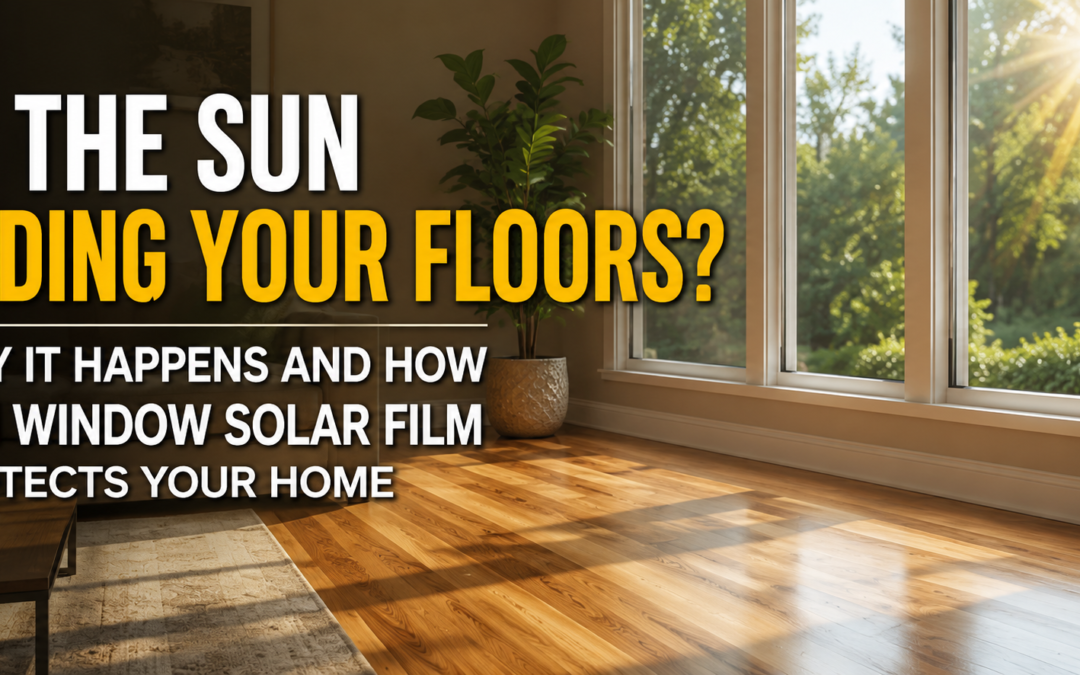
Have you noticed lighter patches on your hardwood near the windows, or carpet that looks worn and washed-out in sunny spots? That’s not normal wear. It’s sun damage, and it’s one of the most overlooked causes of interior deterioration in Jacksonville homes and offices.
Every day, your windows let in sunlight that brightens your living space — but that same light carries UV rays, solar heat, and visible-light energy that quietly break down flooring, furniture, and décor. The good news is that this damage is largely preventable. 3M window solar film is a professionally applied window treatment that blocks the harmful parts of sunlight while letting natural light through, protecting your floors without darkening your rooms.
This guide breaks down exactly why floors fade, which materials are most at risk, and how 3M window solar film compares to curtains, blinds, and other protection methods — so you can decide what’s right for your home.
What Causes Floors to Fade From Sunlight?
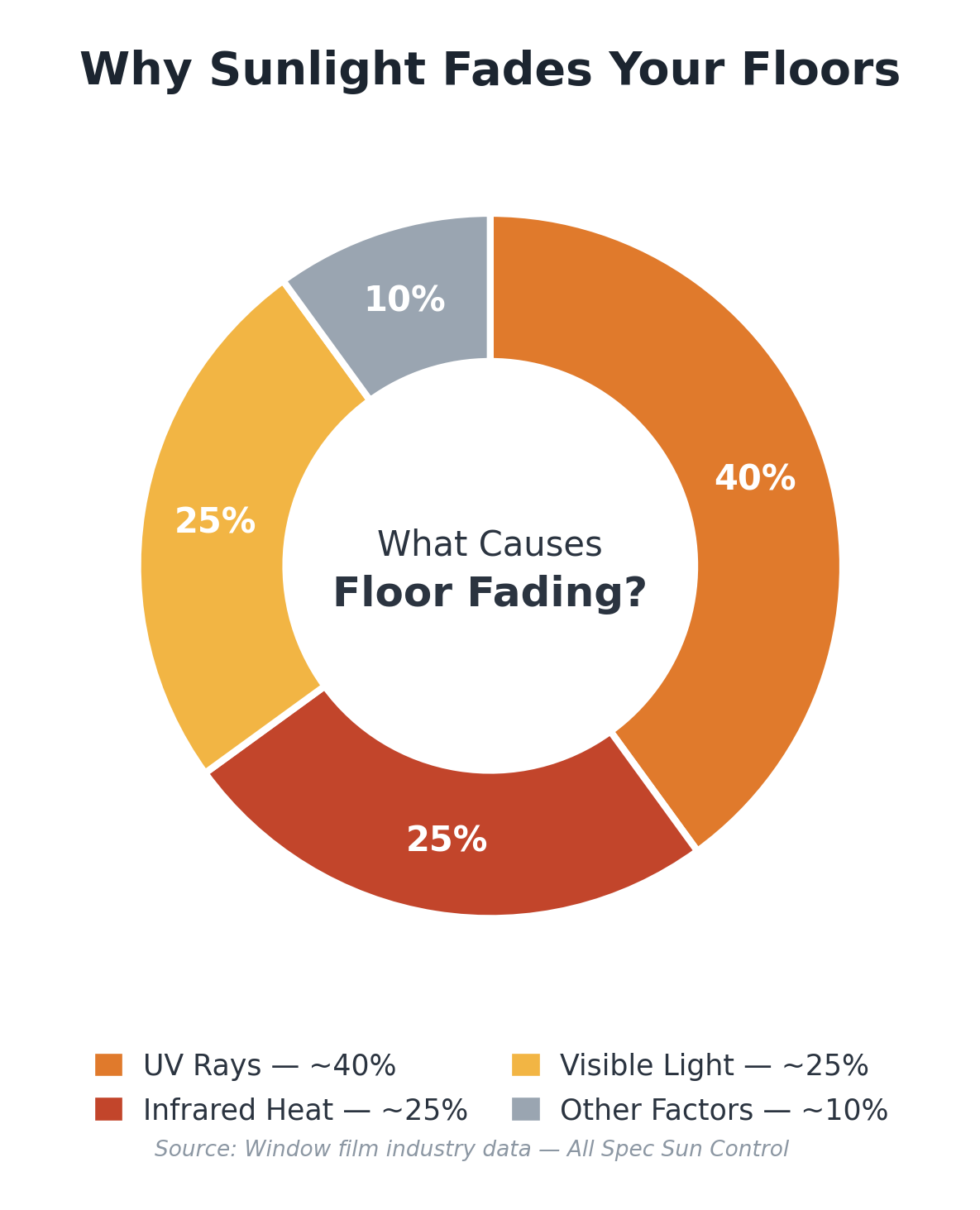
Floor fading comes from three parts of sunlight working together: ultraviolet (UV) rays cause roughly 40% of fading, infrared heat causes about 25%, and visible light accounts for another 25%. The remaining share comes from humidity, cleaning chemicals, and foot traffic. Because UV and heat do most of the damage, blocking them at the window is the most effective place to intervene.
Ultraviolet (UV) Rays — About 40% of Fading
UV radiation is invisible, so the damage builds silently for months before it’s noticeable. UV-A rays penetrate deep into wood and fabric, breaking down the chemical bonds that hold pigments and dyes together. Standard window glass blocks very little UV-A, which is why floors keep fading even on overcast days — UV passes through clouds and glass with similar intensity.
Infrared Heat — About 25% of Fading
Infrared radiation is the heat you feel through a window, and it does more structural damage than color damage. Repeated heating and cooling cycles cause hardwood to expand and contract, leading to warping, cupping, or cracking at the seams. Vinyl and laminate can bubble or lift, and carpet fibers dry out and become brittle faster in hot spots near glass.
Visible Light — About 25% of Fading
This is the light you can actually see, and it bleaches color out of materials the same way a photograph fades when left in a sunny window. Unlike UV, visible light can’t be eliminated without affecting how bright a room feels — which is why film engineering (not just tint depth) matters so much.
Local note for Jacksonville homeowners: Duval County sits in a humid subtropical climate where the UV index regularly reaches “very high” to “extreme” levels (9–11) from spring through early fall. That long, intense sun season is exactly why floor and furniture fading shows up faster here than in milder climates.
What Are the Warning Signs That Your Floors Are Sun-Damaged?
Sun damage builds gradually, so it’s easy to miss until it’s significant. Watch for:
Visual signs:
-
- Uneven coloration, with areas near windows noticeably lighter than shaded sections
- A dull, washed-out look on previously rich hardwood tones
- “Rings” or outlines where furniture protected one section of flooring from the sun
- Bleached or yellowed patches on carpet, especially near south- or west-facing glass
Structural signs:
-
- Gaps opening up between hardwood planks from heat-related shrinkage
- Boards cupping or lifting slightly at the edges
- Carpet that feels stiff or brittle despite normal foot traffic
If you’re seeing any of these, the damage is already underway. The priority becomes stopping further exposure before it spreads to more of the floor.
Which Flooring Materials Fade the Fastest?
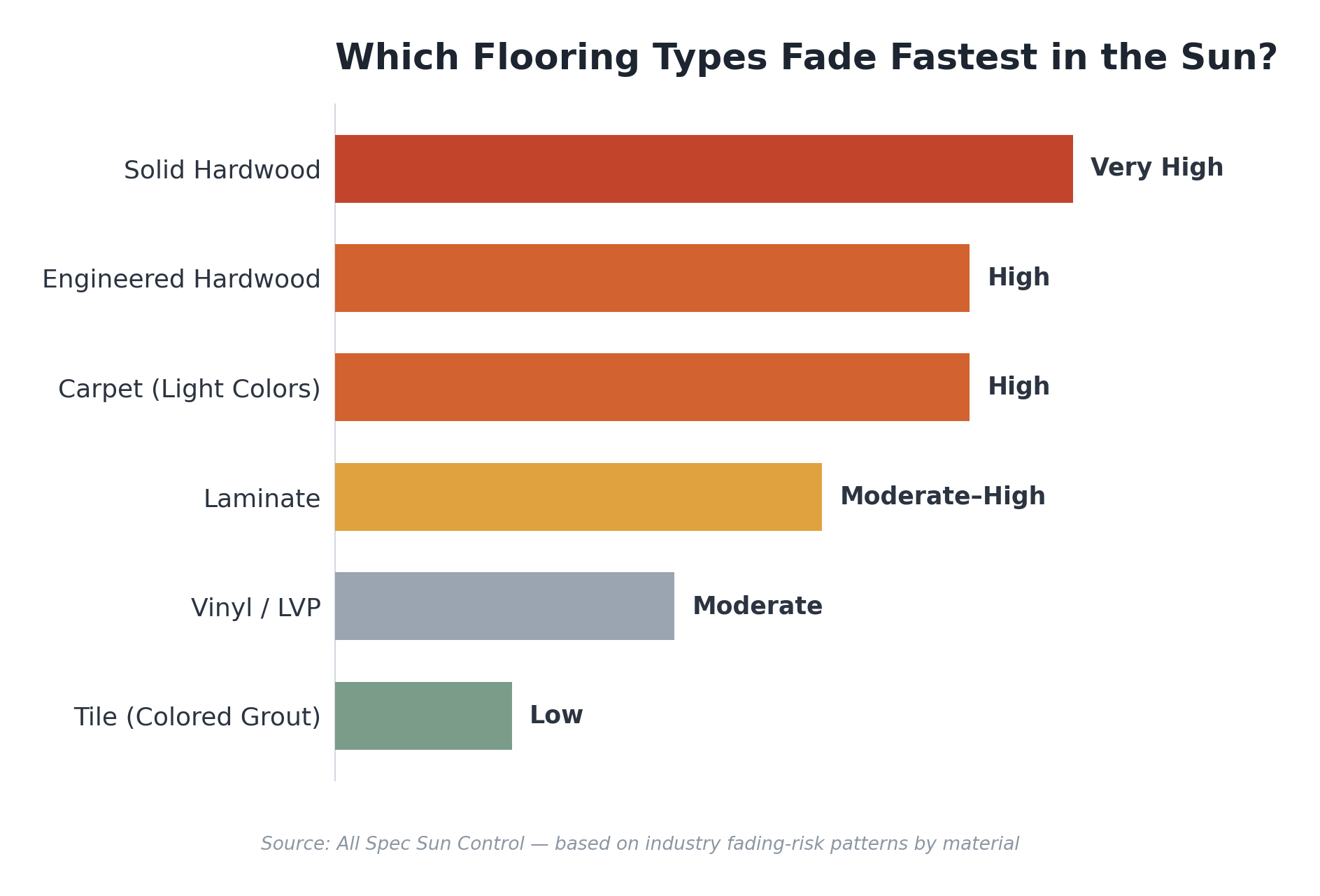
Not every floor reacts to sun exposure the same way. Here’s how common materials compare:
| Flooring Type | Fading Risk | Primary Concern |
|---|---|---|
| Solid hardwood | Very high | UV bleaching plus heat warping |
| Engineered hardwood | High | UV bleaching plus delamination risk |
| Carpet (light colors) | High | UV and visible-light bleaching |
| Laminate | Moderate–high | Surface fading and heat bubbling |
| Vinyl / LVP | Moderate | Heat warping and color shift |
| Tile (colored grout) | Low | Grout discoloration over time |
Hardwood is the most expensive flooring type to replace, which makes UV protection especially worthwhile for rooms with large windows, sliding glass doors, or skylights.
What Is 3M Window Solar Film and How Does It Work?
3M window solar film is a thin, multi-layer film applied directly to existing window glass that blocks UV rays and solar heat while still letting natural light through. Rather than relying on simple dye or metallic coatings, 3M’s films use nano-layer optical technology — hundreds of microscopically thin layers that selectively reject specific wavelengths of solar energy before they ever reach your flooring.
Once professionally installed, the film becomes a permanent part of the glass. It works passively around the clock, with no need to open, close, or adjust anything — unlike curtains or blinds, which only protect when they’re shut.
How Does 3M Window Solar Film Protect Against Floor Fading?
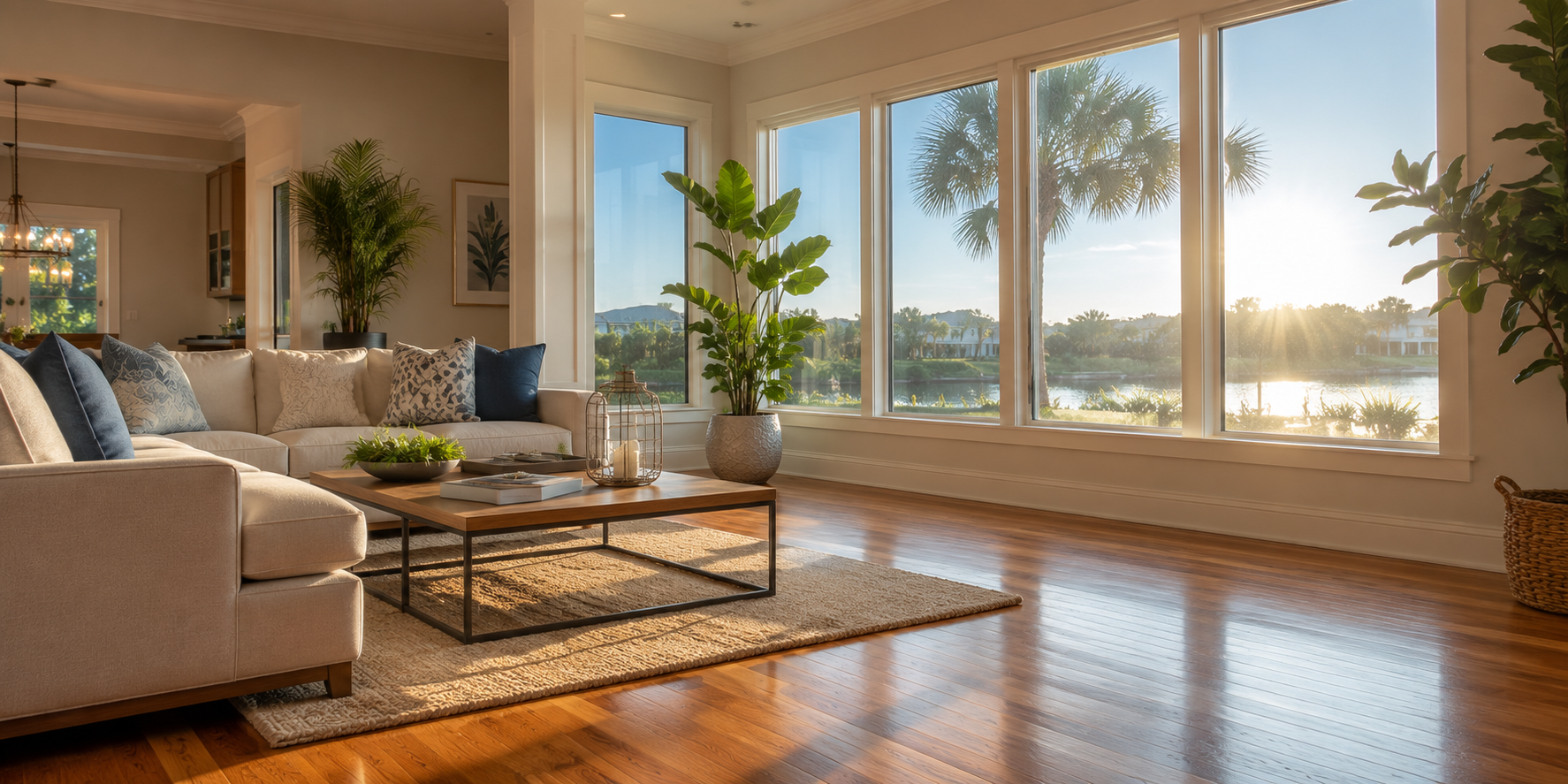
Blocks the Majority of Harmful UV Rays
3M’s residential film lines are built to reject the large majority of UV-A and UV-B radiation reaching the glass. Since UV accounts for roughly 40% of all fading, this single layer of protection addresses the single biggest cause of color loss in hardwood, carpet, and rugs.
Reduces Solar Heat Gain
Beyond UV, 3M films also reject a substantial share of infrared heat — performance varies by series, with some residential lines rejecting up to roughly 60–80% of solar heat depending on the product. Less heat at the window means fewer expansion-and-contraction cycles stressing your hardwood, and a cooler room overall.
Protects Furniture, Artwork, and Décor Too
The same UV and heat that fade floors also damage upholstery, wood furniture, artwork, and window treatments. Because the film treats the entire window, it protects everything in the sun’s path — not just the flooring directly below it.
Preserves Natural Light and Views
A common concern is that window film will make a room feel dark. Modern 3M films are available across a wide visible-light-transmission range, so many homeowners can get strong UV and heat protection while keeping rooms bright and views clear — a meaningfully different experience than older, heavily tinted films.
Is 3M Window Solar Film Worth It Compared to Curtains or Blinds?
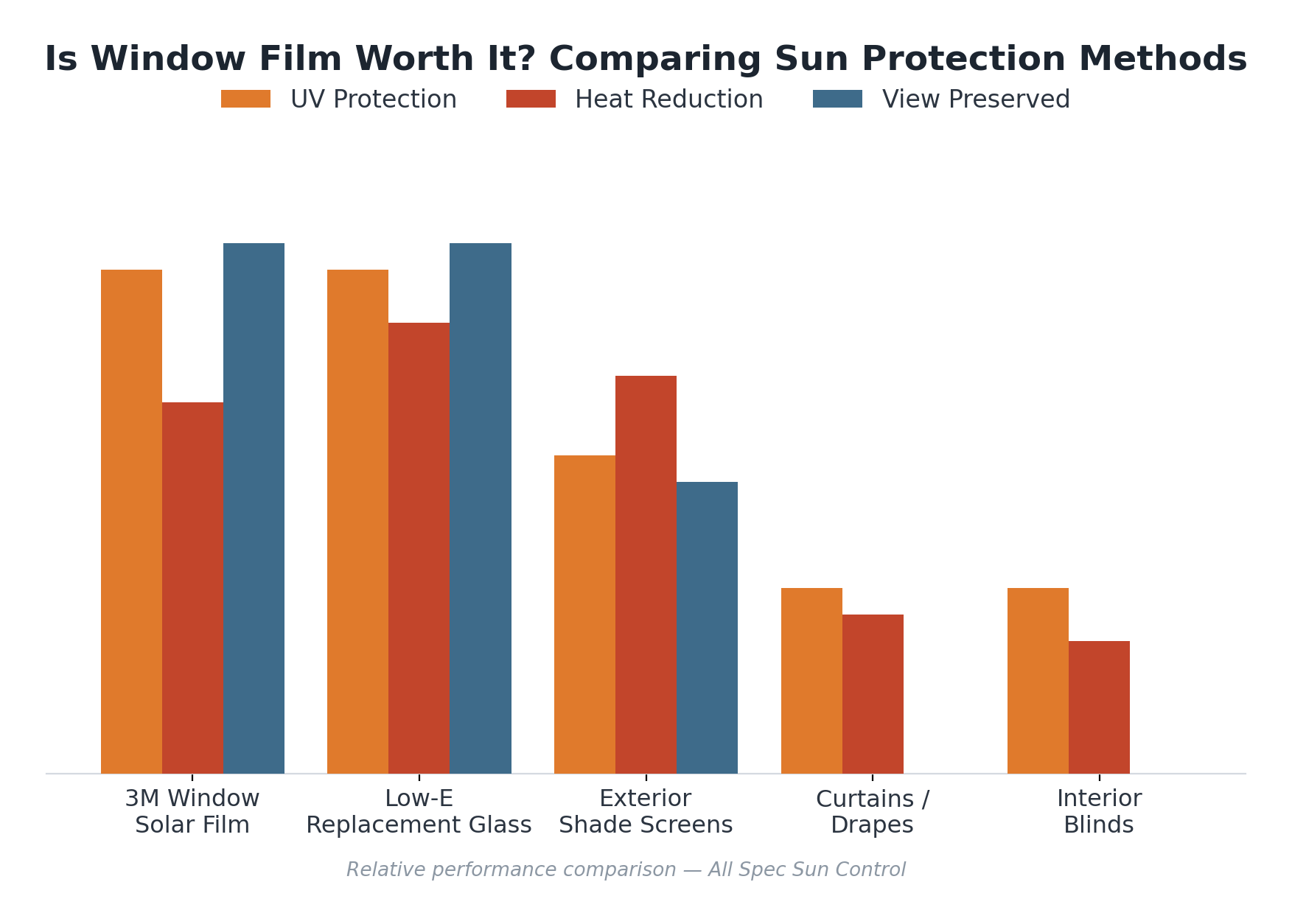
Yes, for most homes — because window film protects 24 hours a day without blocking the view, while curtains and blinds only work when closed. Here’s how the main options stack up:
| Method | UV Protection | Heat Reduction | View Preserved | Typical Lifespan |
|---|---|---|---|---|
| 3M window solar film | High (most UV blocked) | Moderate–high | Yes | 15–20+ years |
| Curtains / drapes | Partial, only when closed | Partial | No | 5–10 years |
| Exterior shade screens | Moderate | High | Partial | 10–15 years |
| Interior blinds | Moderate, only when closed | Low | No | 5–8 years |
| Low-E replacement glass | High | High | Yes | 20–25 years |
For homeowners who want to keep their windows open and bright while still protecting their floors, window film offers the best balance of protection, cost, and convenience compared to full glass replacement or living with curtains drawn.
How Much Does 3M Window Solar Film Cost?
Most homeowners spend roughly $5 to $20 per square foot installed, which typically works out to $250–$700 per standard window or several hundred to a few thousand dollars for a whole home, depending on film grade and window count. Pricing depends on:
-
- Number and size of windows
- Film series (clear UV film vs. spectrally selective ceramic-style film)
- Whether old film needs to be removed first
- Window accessibility (skylights and large glass doors cost more to install)
Many homeowners offset part of the cost through reduced cooling bills, since the same film that blocks fading also lowers solar heat gain — pairing nicely with broader energy saving window film strategies for the whole house.
Why Does Professional Installation Matter?
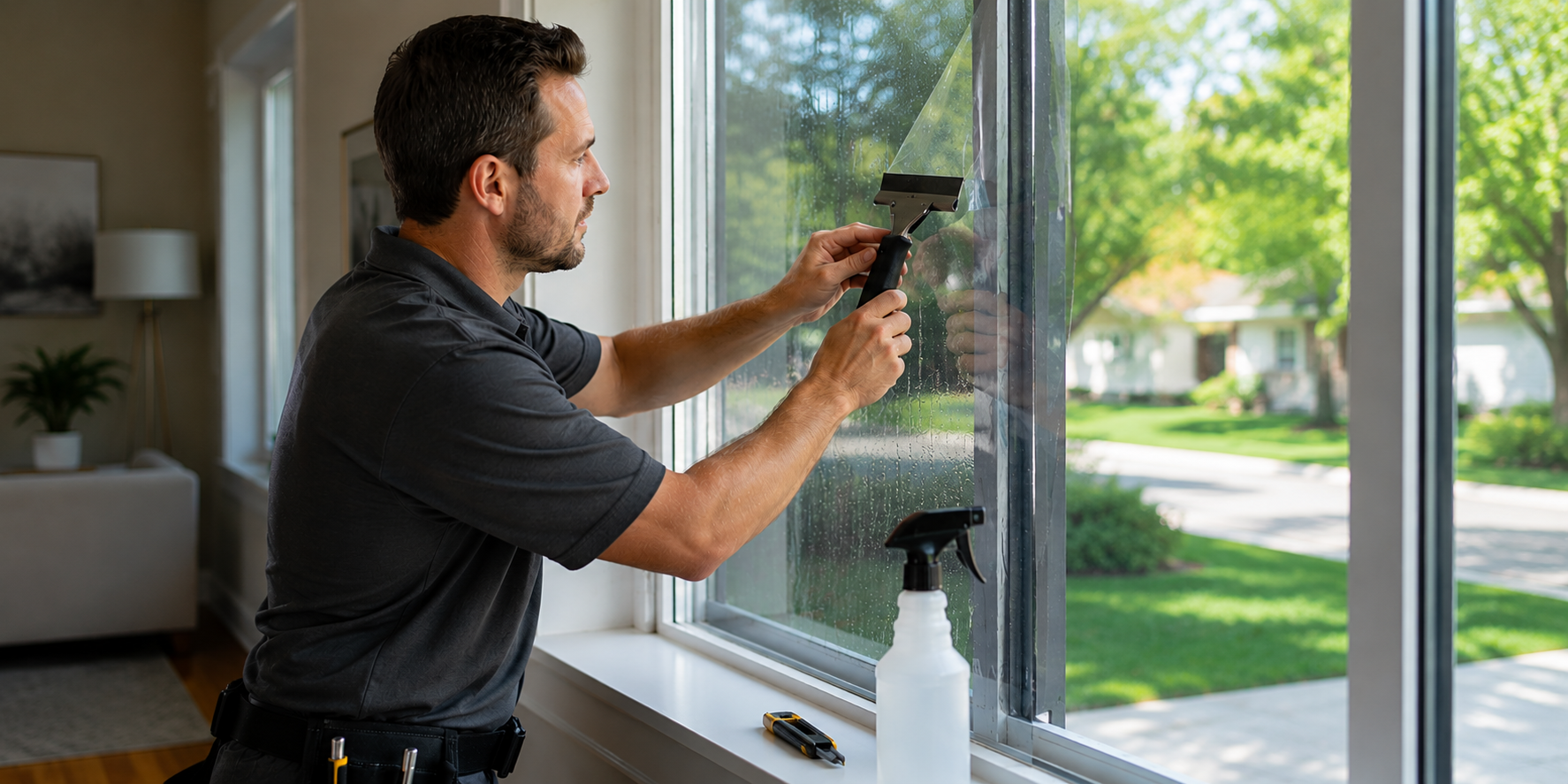
Window film looks simple, but installation quality directly affects how well it performs and how long it lasts.
What a qualified installer gets right:
-
- Film applied without bubbles, creases, or lifting edges
- The correct film matched to your glass type — some high-heat-rejection films can cause thermal stress on single-pane or older tempered glass if mismatched
- Full manufacturer warranty coverage, which most 3M films only honor with certified installation
- Film selection based on window orientation and your specific fading or comfort goals
Common DIY mistakes to avoid:
-
- Retail film is generally lower-grade than professional film
- Misalignment and trapped air bubbles are common without specialized tools
- No warranty protection if something goes wrong
- Incorrect film must often be removed and redone, doubling the cost
Who Should Consider 3M Window Solar Film?
-
- Homeowners with hardwood, carpet, or rugs near south- or west-facing windows
- Anyone protecting valuable furniture, art, or rugs from cumulative sun exposure
- Businesses and offices dealing with glare on screens or fading in showrooms — office window tinting addresses both comfort and protection in commercial spaces
- Households trying to cut cooling costs in Florida’s long, intense sun season
- Renters in some cases, since film can often be removed without damaging glass (landlord approval may be required first)
What Should You Look for in Home Window Tinting Services?
Not all installers deliver the same results. Before hiring a provider for home window tinting services, look for:
-
- Certified dealer status with the film manufacturer (this is usually required for warranty coverage)
- A lifetime warranty on materials and workmanship
- Local experience with Jacksonville’s heat and humidity, which affects film selection and installation timing
- A range of VLT (visible light transmission) options, not a one-size-fits-all film
- A real portfolio and reviews, not just stock marketing photos
How Do You Maintain Window Film So It Lasts?
Window film needs very little upkeep, but a few habits extend its life:
-
- Wait at least 30 days after installation before cleaning the windows, so the adhesive fully cures
- Clean with a soft cloth and a mild, non-abrasive cleaner
- Avoid ammonia-based cleaners (including most standard glass cleaners), which can degrade film over time
- Have a professional inspect the edges every few years, especially on south- and west-facing windows
Frequently Asked Questions
Does sunlight really cause floors to fade?
Yes. Continuous exposure to UV rays, solar heat, and visible light breaks down pigments and finishes over time, even through closed windows.
Can 3M window solar film actually prevent floor fading?
It significantly reduces it. Since UV and heat together cause roughly two-thirds of all fading, blocking both at the window slows the process dramatically, though no film eliminates fading from visible light entirely.
Will window film make my home darker?
Not necessarily. Many 3M films are available in lighter VLT options that allow most natural light through while still rejecting UV and a meaningful share of solar heat.
How much does 3M window solar film cost?
Most homeowners pay roughly $5–$20 per square foot installed, or about $250–$700 per standard window, depending on film type and window size.
Is window film worth it for floor protection?
For homes with hardwood, light carpet, or valuable furniture near sunny windows, yes — it offers continuous, passive protection that curtains and blinds can’t match while they’re open.
Does window film work on double-pane windows?
Yes, but the film must be matched correctly to insulated glass. The wrong film can trap heat between panes and stress the seal, so a professional assessment of glass type is important first.
Will window film affect my Wi-Fi or cell signal?
Standard metallic films can interfere with wireless signals. Most modern 3M non-metallic films are designed to avoid this issue, which matters for home offices and connected devices.
Is there window solar film installation near me in Jacksonville?
All Spec Sun Control installs 3M window solar film throughout the Jacksonville, FL area for both homes and businesses.
Does window film protect furniture as well as floors?
Yes. The same UV and heat that fade flooring also damage upholstery, wood furniture, and artwork, so the protection applies to the whole room.
Should I choose a DIY kit or a professional installer?
Professional installation is strongly recommended for any permanent application. It protects the warranty, avoids bubbling or misalignment, and ensures the film is compatible with your specific glass type.
Key Takeaways
- Floor fading comes from three sources: UV rays (~40%), infrared heat (~25%), and visible light (~25%)
- Hardwood, carpet, and bamboo are the most vulnerable flooring types
- 3M window solar film blocks most UV rays and a significant share of solar heat without meaningfully darkening rooms
- Film offers continuous, 24/7 protection — unlike curtains or blinds, which only work when closed
- Typical installed cost runs $5–$20 per square foot, or roughly $250–$700 per window
- Professional installation protects the manufacturer warranty and prevents bubbling or glass-compatibility issues
- The right film depends on window orientation, glass type, and whether your priority is fading prevention, heat reduction, or both
Ready to Protect Your Floors?
Sunlight can brighten your home, but left unchecked, it will gradually fade your floors, furniture, and décor. If you’re ready to stop the damage while keeping your home bright, contact All Spec Sun Control for a free consultation. Our team will assess your windows, orientation, and flooring to recommend the right 3M window solar film for your home or office.