Solar window film costs $5.50–$16+ per square foot installed in Jacksonville, depending on the type. Dyed film runs $5.50–$7.50/sq ft, metallic/carbon film runs $7.50–$11/sq ft, and premium ceramic (like 3M Prestige) runs $11–$16+/sq ft. Most homes spend $600–$3,000 total depending on window count and film grade, with a typical payback period of 3–5 years from energy savings.
For Jacksonville property owners, managing energy costs and protecting interiors from sun damage are everyday concerns. Solar window film reduces the amount of solar energy that enters through glass, and the right choice comes down to matching film technology to your budget and goals. This guide breaks down 2026 solar window film pricing, the technology differences that drive that pricing, and what to expect from a professional quote.
Solar Window Film Cost: 2026 Pricing by Type
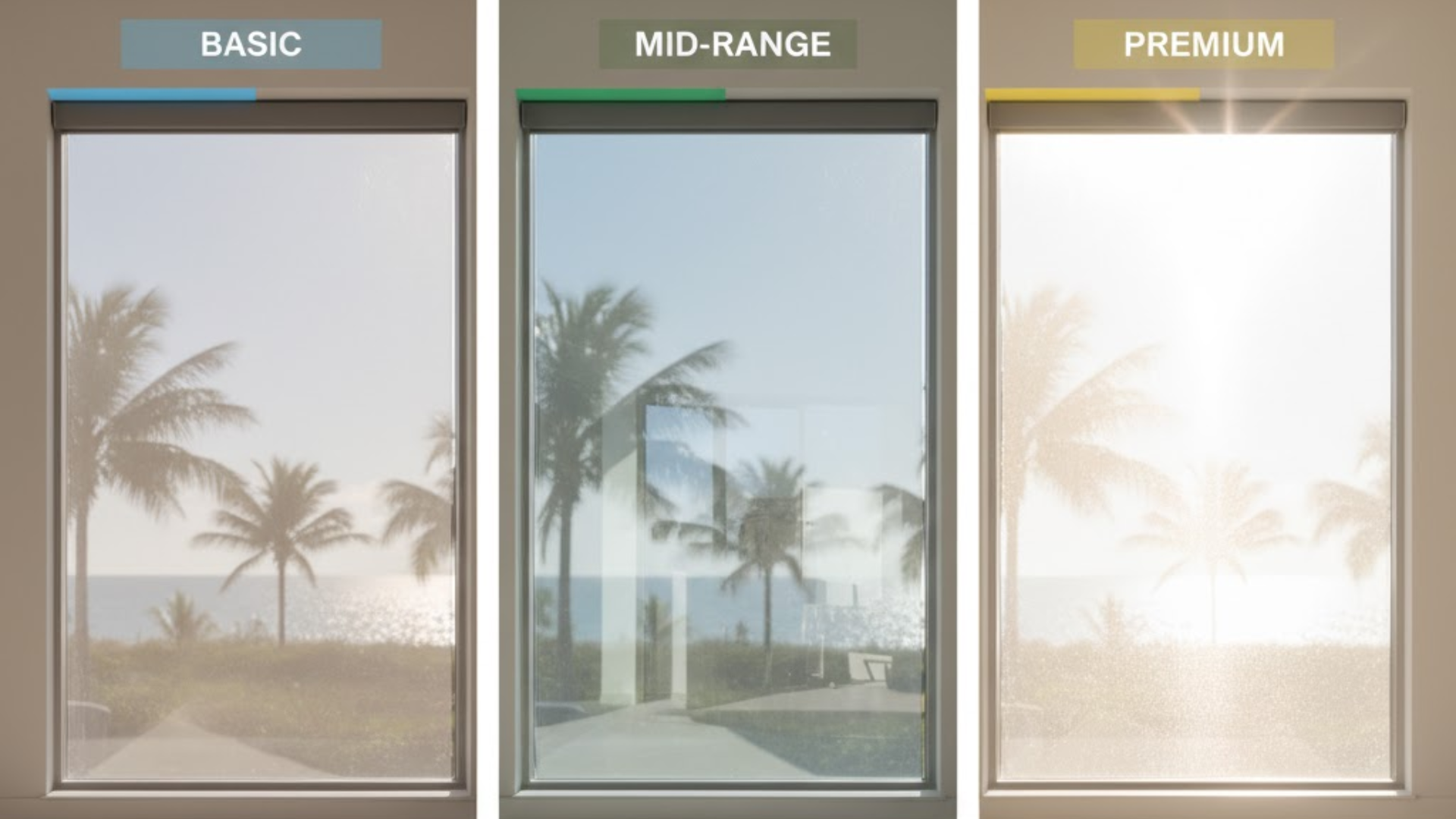
Solar film price is typically quoted per square foot and includes material plus professional installation. Here’s the current cost breakdown for home window tinting prices in the Jacksonville market:
| Film Type | Heat Rejection | Appearance | Signal Interference | 2026 Cost (per sq. ft.) |
| Dyed (Economy) | Good | Tinted, can fade over time | No | $5.50 – $7.50 |
| Metallic/Carbon (Mid-Range) | Excellent | Reflective/mirrored | Yes | $7.50 – $11.00 |
| Ceramic / 3M Prestige (Premium) | Superior | Clear, non-reflective | No | $11.00 – $16.00+ |
| Security/Safety Film | Varies | Optically clear | No | Varies by thickness |
These ranges are estimates — actual solar window film cost depends on your installer, window access, and project specifics. Whether you’re comparing solar film price for one room or pricing out a whole house, the tier of film you choose (economy, mid-range, or premium) is the single biggest cost driver.
What’s Driving 2026 Solar Film Market Pricing?
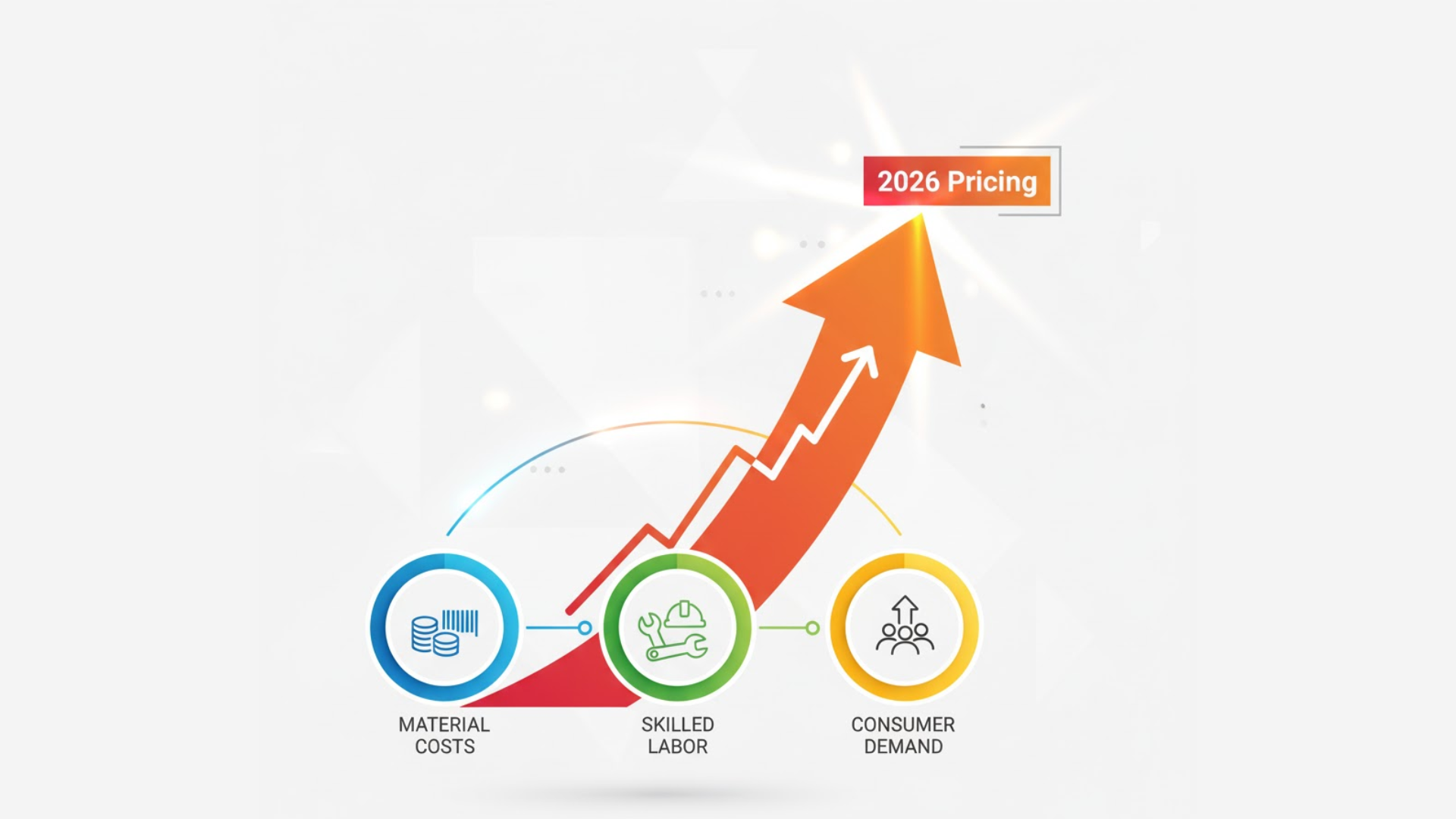
A few forces are shaping the solar film market and what you’ll pay for professional window film installation this year:
- Material and manufacturing costs: Raw material costs — the polyester base, plus specialty metals and ceramics in advanced films — are still affected by global inflation, even as it moderates.
- Skilled labor rates: Professional installation is a meticulous craft. Skilled tradespeople remain in high demand across construction and home improvement, and that labor premium protects your warranty and long-term film performance.
- Growing consumer demand: Florida’s high energy costs are pushing more property owners toward solar film, which supports a competitive, healthy local market — good news for consumer pricing.
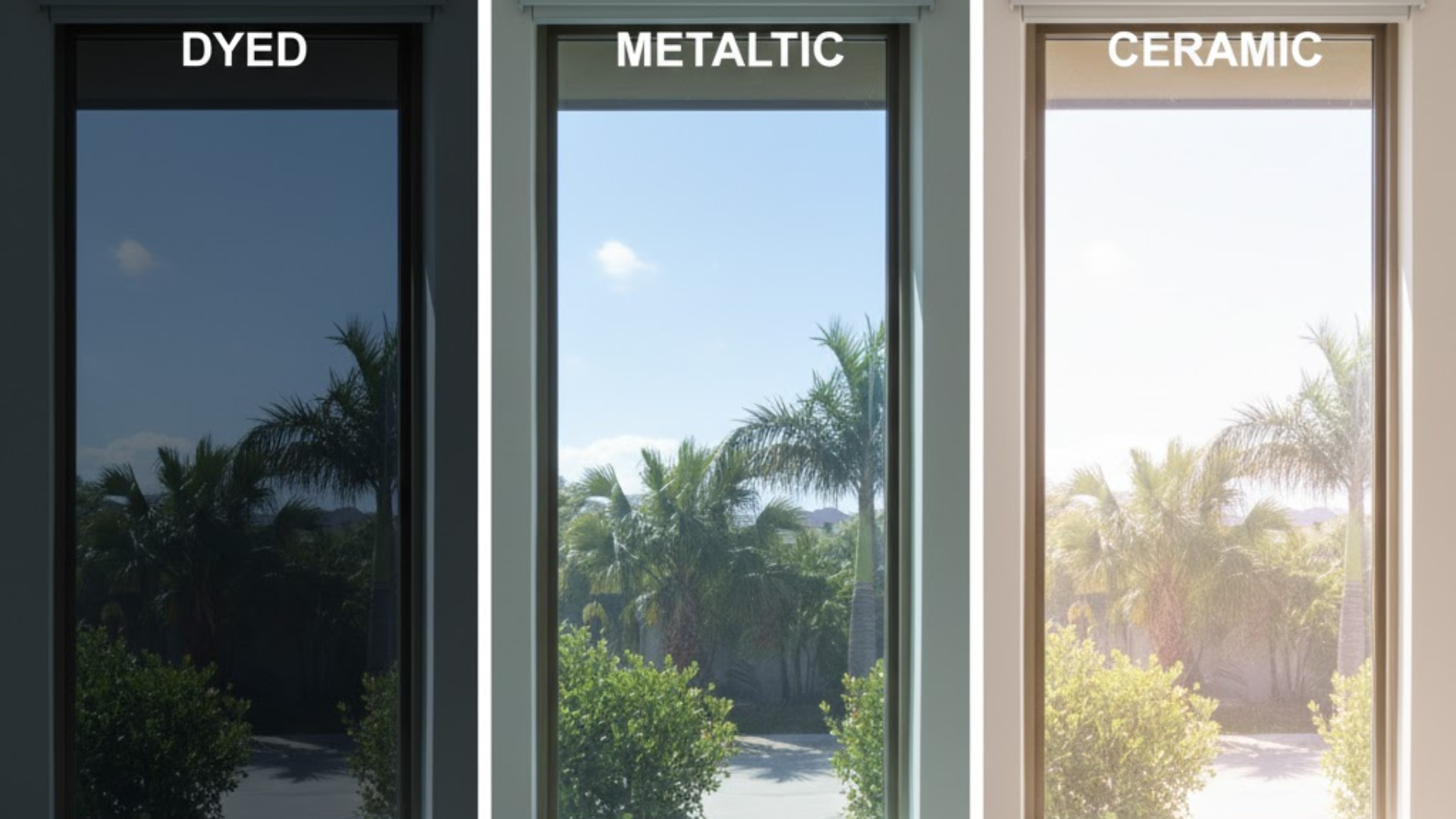
Heat Control Window Tint: Which Type Rejects the Most Heat?
If heat control is your main priority, film technology matters more than tint darkness. Here’s how the three main categories compare:
Dyed Window Film (The Economy Choice)
Dyed film uses absorptive dyes to soak up solar heat. It cuts glare and blocks most UV rays, but its heat rejection is lower than metallic or ceramic options, and some dyed films can discolor over time.
Metallic & Reflective Window Film (The Performance Balance)
Metallic film uses microscopic metallic particles to reflect solar energy, giving strong heat rejection and a mirrored exterior look that adds daytime privacy. The tradeoff: it can interfere with cellular or Wi-Fi signal, and the reflective look isn’t right for every property.
Ceramic & Spectrally Selective Film (The Premium Heat-Control Solution)
Ceramic film uses non-metallic, non-conductive nano-ceramic particles that are “spectrally selective” — they target infrared heat while letting visible light through. Benefits include high heat rejection without a dark tint, clear views, zero signal interference, and strong durability.
3M Solar Window Film Explained: Prestige vs. Standard Options
3M is one of the most established names in solar window film, and its product lines map onto the tiers above. 3M Prestige Series film is the brand’s premium, spectrally selective (ceramic-class) option — engineered for high heat rejection with minimal visible-light impact, which is why it commands the top end of the $11–$16+/sq ft range. As a 3M Authorized Dealer, All Spec Sun Control installs and warranties genuine 3M film, which matters for both film performance and keeping your window manufacturer’s warranty intact.
Security & Safety Glazing Film
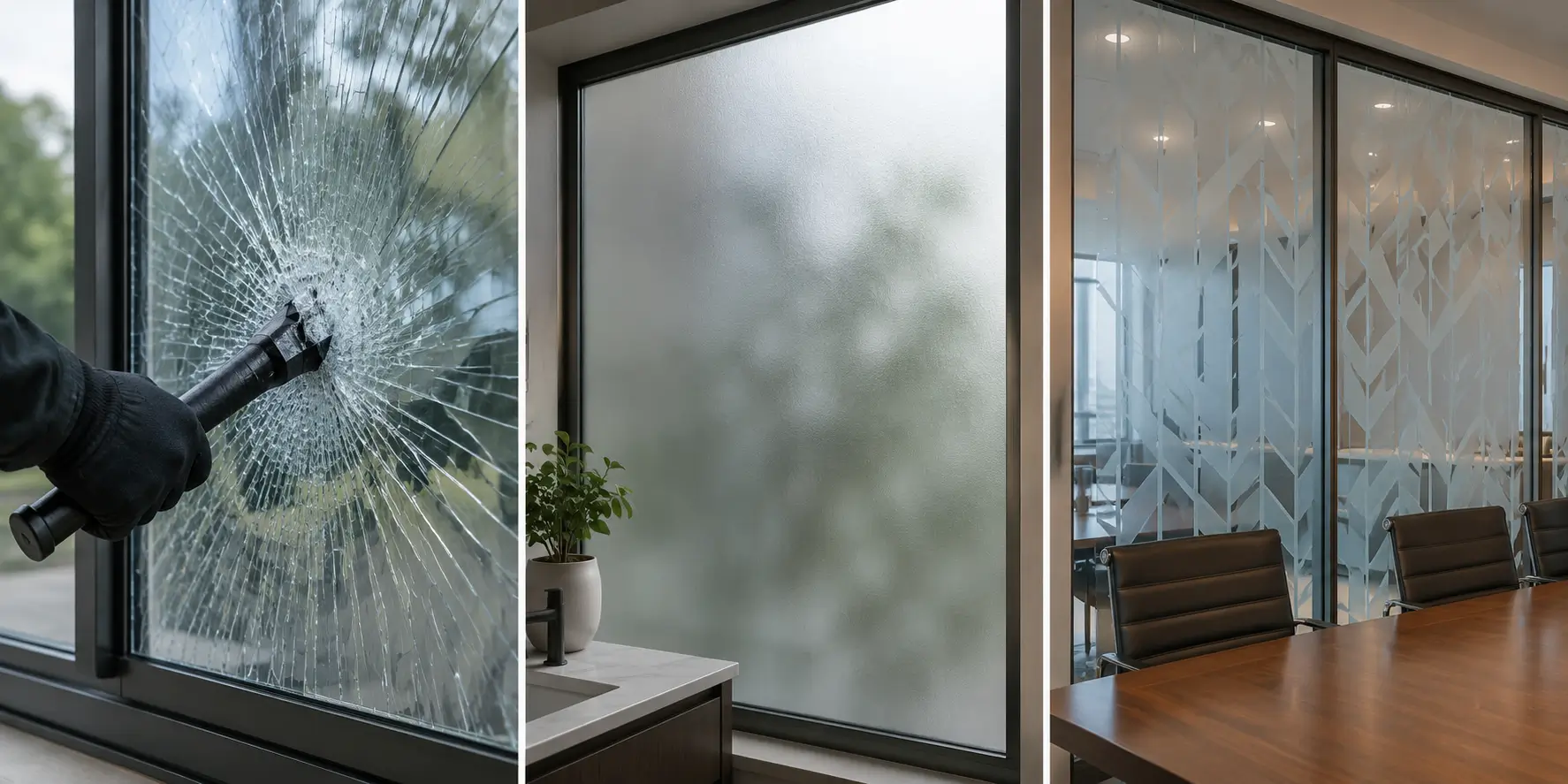
Beyond solar control, specialty films address impact protection and privacy:
- Security film: A much thicker, stronger film designed to hold glass together on impact. It isn’t “burglar-proof,” but it creates a serious barrier that slows intruders, protects occupants from flying glass in storms or accidents, and reduces blast hazard.
- Decorative & frosted film: Replicates etched or sandblasted glass at a fraction of the cost — ideal for bathrooms, conference rooms, and front doors.
Is safety glazing film as strong as laminated glass? No — safety/security window film and laminated glass both improve impact resistance, but they aren’t equivalent. Laminated glass is manufactured with an interlayer bonded between two glass panes at the factory, giving it a higher, code-rated level of impact and penetration resistance. Security film is applied to existing glass and significantly improves its ability to hold together on impact, slowing intruders and containing shards, but it is a retrofit upgrade rather than a laminated-glass replacement. For code-required impact ratings (e.g., hurricane zones), laminated or impact-rated glass is the compliant option; security film is best understood as a strong layer of added protection for existing windows.
Commercial Window Tinting in Jacksonville, FL
Businesses searching for a commercial glass tinting company in Jacksonville are typically weighing the same film tiers against different priorities: energy costs across large glass footprints, employee and customer comfort, and brand-appropriate appearance (clear ceramic vs. reflective metallic). Commercial window tinting projects are quoted the same way as residential — per square foot by film tier — but often see efficiencies from larger contiguous glass runs, offset by added complexity for storefronts, high-rise access, or specialty glazing. Commercial window tint also carries the same property-value logic as residential: documented energy-efficiency upgrades are increasingly attractive to tenants and buyers.
Line-by-Line: What’s in Your Quote
- Material costs: The film itself — the largest variable, set by the tier you choose (dyed, metallic, or ceramic/3M Prestige).
- Professional labor: Typically 30–50% of total cost. Correct installation is what activates and protects your warranty and ensures a flawless, bubble-free result.
- Project-specific factors: Skylights, second-story windows, arched or circular windows, and total pane count all affect labor time.
- Ancillary costs: Removing old, failing film is billed separately, since it’s labor-intensive.
Is Solar Film a Good Investment in Florida?
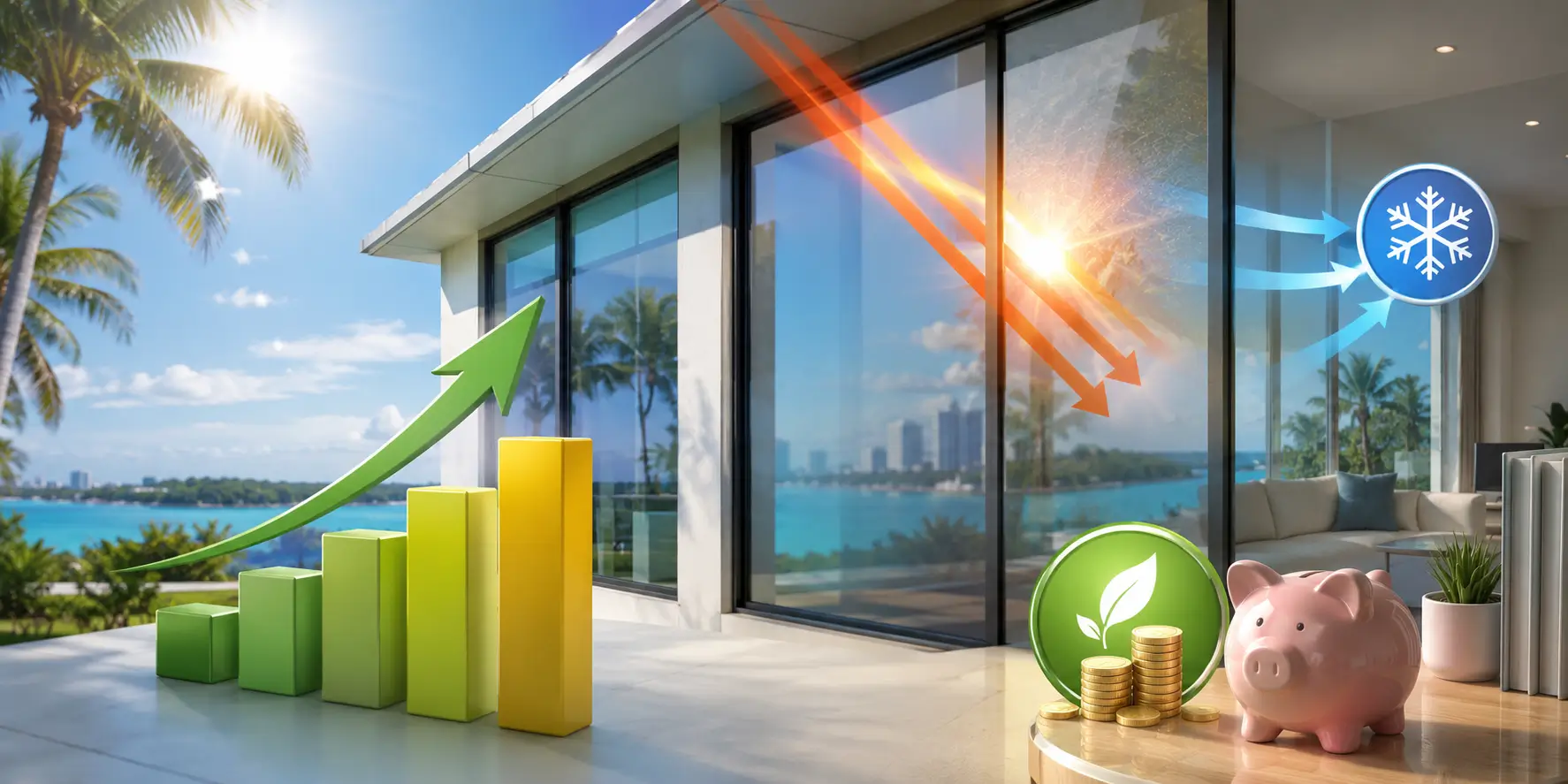
Independent studies show solar window film delivers more energy savings per dollar than attic insulation or HVAC upgrades in Florida’s climate.
- Energy savings: High-performance film can reject up to 79% of solar heat, cutting cooling costs by up to 30% — an estimated $1.00–$2.00 saved per square foot of film per year.
- Payback period: Typically 3–5 years for a professional installation.
Financial Incentives That Lower Your Net Cost
- Federal Energy Efficient Home Improvement Credit: Up to 30% of material cost, capped at $600/year.
- Local utility rebates: Beaches Energy Services offers up to $100 for qualifying installations.
Added Value Beyond Energy Bills
- UV protection: Blocks over 99% of UV rays, protecting floors, furniture, and artwork from fading.
- Glare reduction: Makes screens and living spaces more comfortable.
- Property value: Documented energy-efficiency upgrades are attractive to buyers and tenants, for both residential and commercial window tint applications.
Frequently Asked Questions
How much is solar window film?
Solar window film costs $5.50–$16+ per square foot installed, depending on whether you choose dyed, metallic, or ceramic film. Most homes total $600–$3,000 for a full project.
How long does solar window film last?
Economy dyed films typically last 5–10 years. High-performance metallic and premium ceramic films can last 20+ years, often backed by a lifetime residential warranty.
Will window film make my house too dark?
Not necessarily. Premium ceramic and spectrally selective films block heat and UV rather than visible light, so you can choose a film with high visible light transmission that rejects heat while staying nearly invisible on the glass.
Can I install solar window film myself to save money?
DIY kits exist, but professional installation is strongly recommended — it ensures a bubble-free finish and is usually required to activate the manufacturer’s warranty covering both film and glass.
Will window film void my window manufacturer’s warranty?
Reputable film manufacturers, including 3M, offer their own warranties designed to match or supersede your window warranty — contingent on installation by a certified professional, such as an authorized 3M dealer.
Is safety glazing film as strong as laminated glass?
No. Laminated glass is factory-built with a bonded interlayer and carries code-rated impact resistance; security film is a retrofit that significantly strengthens existing glass but isn’t a substitute where laminated or impact-rated glass is required.
Is reflective window film the best option for privacy?
Reflective film gives strong daytime privacy, but the effect reverses at night when interior lights are on. For 24/7 privacy, decorative or frosted film is the better solution.
About All Spec Sun Control
All Spec Sun Control has served Jacksonville, FL homeowners and businesses since 1983 as a 3M Authorized Dealer, providing residential and commercial window tinting backed by decades of local installation experience.