
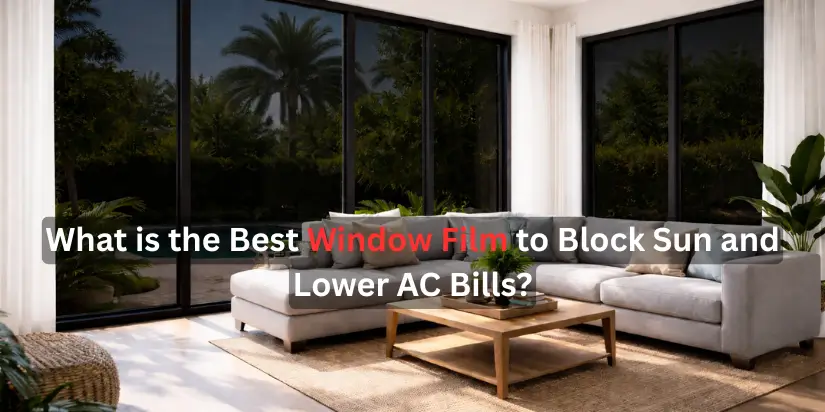
This trapped heat forces cooling systems to work harder than needed. Home window tinting offers a simple and effective solution by reducing heat gain, cutting glare, and improving energy efficiency, all while enhancing everyday comfort without any structural changes.
What Is Window Film and How Does It Work?
Window film is a thin, multi-layered material applied directly onto glass surfaces. It is designed to control how much sunlight and heat pass through the window.
Depending on the type, window film can reflect, absorb, or filter solar energy. Some films are engineered to block infrared heat, while others focus on reducing glare or improving privacy. Advanced films for window tinting in Jacksonville, FL, are designed to maintain natural light while significantly reducing heat buildup indoors.
In simple terms, window film acts as a protective barrier between indoor spaces and harsh external sunlight.
Types of Window Films for Heat and Energy Control
1. Solar Control Window Film
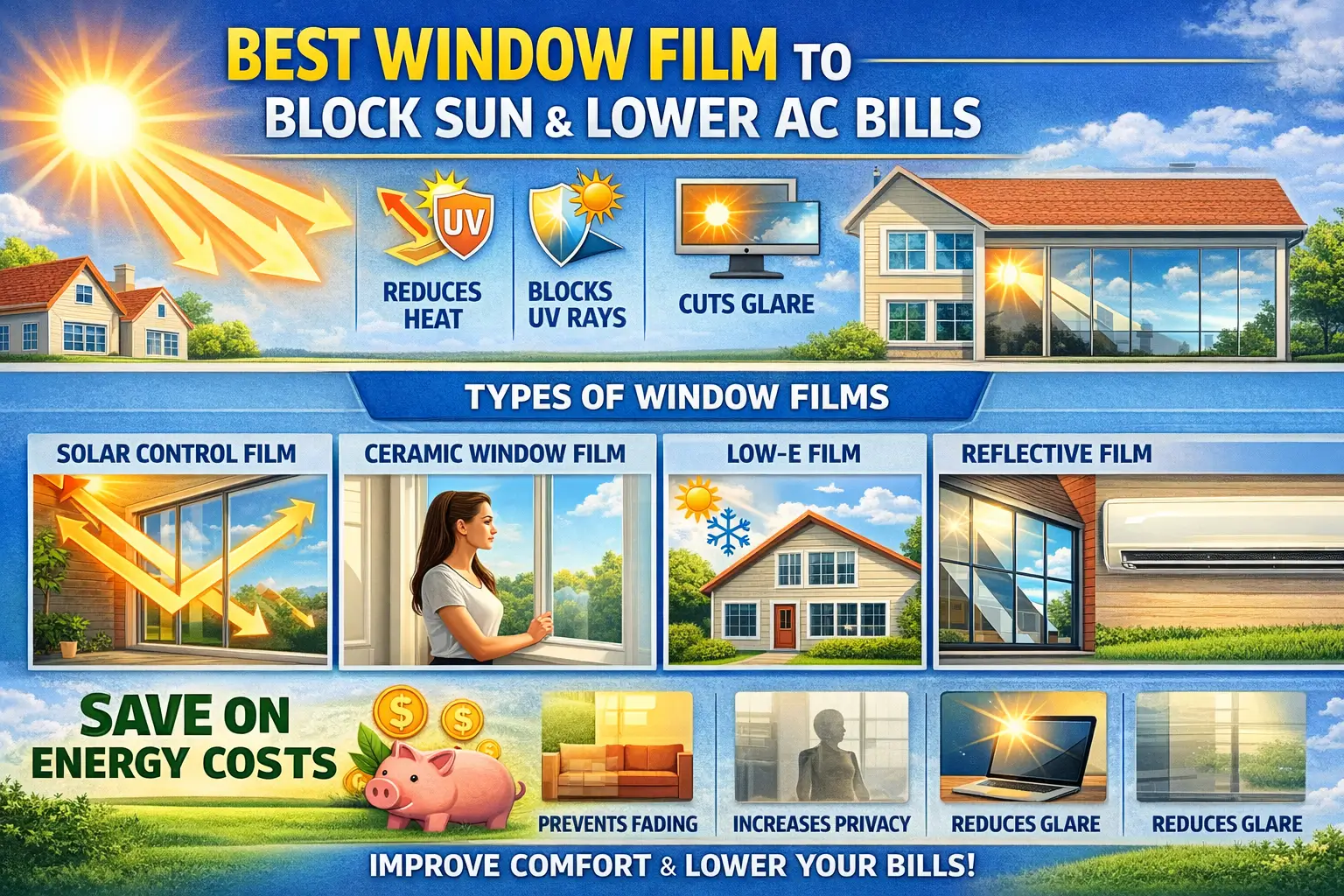
Window film to block sun is designed to reduce heat gain from sunlight. They help maintain a cooler indoor environment by blocking a significant portion of solar energy. These films are commonly used in homes located in hot climates where cooling demand is high.
2. Low-E (Low Emissivity) Film
Low-E films are designed for year-round energy efficiency. They help reflect heat back to its source, keeping interiors cooler in summer and warmer in winter. This makes them a balanced option for improving overall comfort and reducing energy usage.
3. Ceramic Window Film
Ceramic films for home window tinting are known for high performance without affecting visibility. They provide strong heat rejection while allowing clear outdoor views. These films are also durable and resistant to fading over time, making them a long-lasting solution for energy control.
4. Reflective Window Film
Reflective films have a mirror-like appearance on the outside. They are highly effective in blocking heat and reducing glare during daylight hours. They also enhance privacy by limiting visibility from outside, especially in bright conditions.
Which Window Film Is Best for Lowering AC Bills?
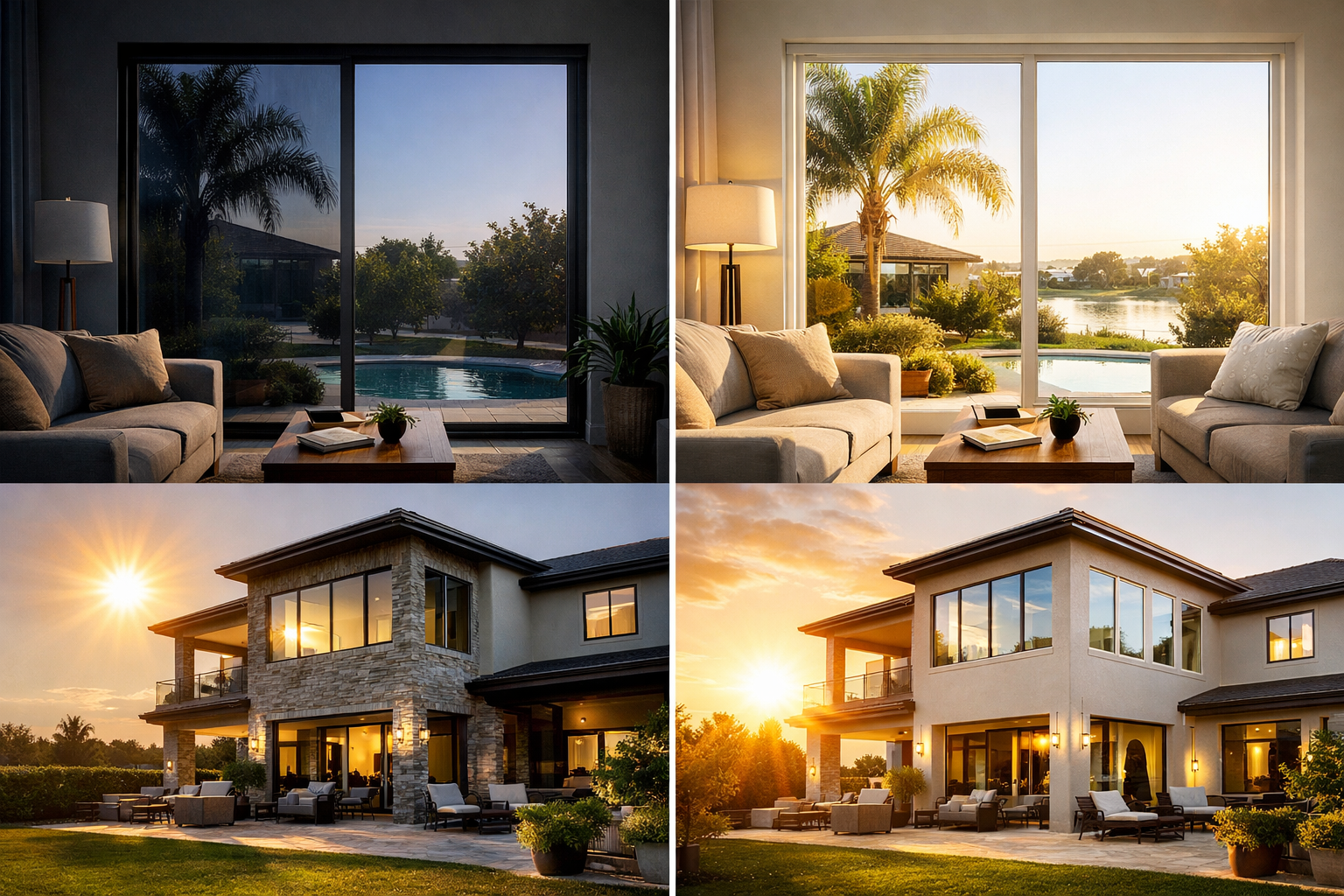
When the goal is to reduce air conditioning costs, performance becomes the key factor for window tinting in Jacksonville, FL. Solar control and ceramic window films are generally considered the most effective options.
Solar control films significantly reduce heat entering through glass, directly lowering indoor temperatures. Ceramic films, on the other hand, offer high heat rejection without compromising natural light or clarity.
The best choice often depends on window placement, sun exposure, and building design. South- and west-facing windows typically benefit most from high-performance solar control solutions.
Key Benefits of Home Window Tinting Beyond Energy Savings
Less indoor heat
- Decorative window tint helps block a large portion of solar heat, keeping indoor spaces noticeably cooler and more comfortable.
UV protection
- It filters harmful UV rays that can affect skin health and cause long-term sun damage indoors.
Prevents fading of furniture
- By reducing UV exposure, it protects furniture, flooring, and fabrics from fading and discoloration.
Reduces glare
- Office window tinting minimizes harsh sunlight glare on screens and surfaces, making work and relaxation more comfortable.
More privacy
- Window film limits outside visibility, especially during daytime, without blocking natural light.
Better window appearance
- It gives windows a clean, modern, and uniform look that enhances the overall style of the space.
Factors to Consider Before Choosing Window Film
Climate
- The local weather and sunlight intensity decide how strong the film for house window tinting needs to be for effective performance.
Glass type
- Different glass surfaces react differently, so compatibility is important for proper adhesion and results.
Heat control
- The level of heat reduction required depends on how much sun exposure your space receives.
UV protection
- Higher UV blocking window film for residential spaces helps protect interiors and improves long-term comfort and safety.
Privacy
- Some films offer stronger daytime privacy, depending on visibility needs from outside.
Budget
- Costs vary based on film quality and features, so it’s important to balance price with long-term value.
Durability
- A good-quality film should last for years without bubbling, fading, or peeling.
Conclusion
Choosing the right film for window tinting in Jacksonville, FL, can significantly improve indoor comfort while reducing dependency on air conditioning systems. Beyond lowering energy bills, it enhances daily living by controlling heat, protecting interiors, and improving privacy.
The effectiveness of window film depends on selecting the right type based on your specific environment and needs. Whether the focus is heat reduction, clarity, or privacy, there is a suitable option for every space.
For expert guidance and professional installation, All Spec Sun Control offers reliable window tinting solutions designed for long-term comfort and energy efficiency.
FAQs
What is the best window film to reduce heat?
Ceramic or solar control window films are best as they block infrared heat and UV rays effectively while keeping interiors cooler.
What is an RTO approved sun control film?
It is a legally compliant film that meets visibility rules (about 50–70% light transmission depending on the window) while still reducing glare and heat.
Do window films reduce sunlight?
Yes, they reduce sunlight by filtering visible light, UV rays, and infrared heat, improving comfort without fully blocking natural light.
Is window film effective for lowering energy bills?
Yes, it reduces heat gain through windows, helping air conditioners work less and lowering electricity costs over time.