
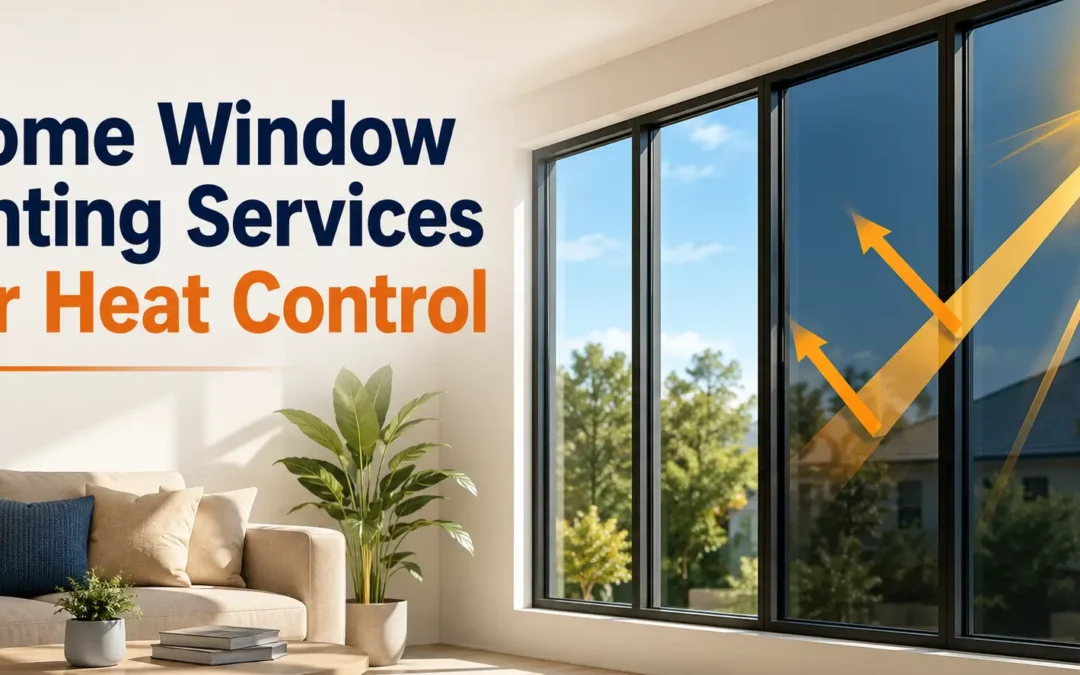
Sunlight entering through home windows can significantly increase indoor temperatures, especially during peak afternoon hours. Rooms with large glass areas or direct sun exposure often become warmer than other areas of the house.
Home Window Tinting Services provide a practical solution for reducing heat buildup while allowing natural light to enter. Window films help control the amount of solar energy passing through glass, making indoor spaces more comfortable.
Unlike replacing windows, tinting improves existing glass performance with a simpler installation process. It can also support energy efficiency by reducing the workload on cooling systems.
How Do Home Window Tinting Services Help Control Heat?
Window films work by reducing the amount of solar energy that passes through windows. They are designed to reflect, absorb, or filter sunlight before it increases indoor temperatures.
Home window tinting services help control heat by installing films that reduce solar heat gain and block a portion of the infrared rays that contribute to warmth inside the home. This helps rooms stay cooler while still allowing natural daylight to enter.
Window films are applied directly to existing glass, creating an additional layer of protection. This helps improve comfort without the cost and disruption of replacing windows.
During warmer months, home window tinting can help reduce heat entering through sun-facing windows. This makes living spaces more comfortable and can help reduce the strain on cooling systems.
What Types of Window Films Help With Heat Reduction?
Different window films are designed to reduce solar heat and improve indoor comfort in different ways. Options like solar control films, energy-efficient films, and ceramic films help manage heat while maintaining natural light and window clarity.
| Film Type | Main Benefit | Appearance | Best For |
|---|---|---|---|
| 3M Prestige Solar Film | Reduces heat, glare, and UV exposure | Clear and low-reflective | Homeowners who want strong performance with minimal visual change |
| Energy Saving Window Film | Helps improve temperature control and efficiency | Varies by product | Homes looking to support comfort and energy savings |
| Ceramic Window Film | Reduces infrared heat while keeping a natural look | Clean and modern | Rooms with strong sunlight and homeowners who want a non-reflective finish |
1. 3M Prestige Solar Film for Heat Protection
3m solar window film, such as 3M Prestige Solar Film, is designed to provide solar control without significantly changing the appearance of windows.
This type of film helps reduce heat from sunlight while allowing visible light to pass through. It is a useful option for homeowners who want a clearer window appearance with improved comfort.
3M Prestige Solar Film also helps reduce glare and block harmful UV rays. This provides added protection for furniture, flooring, and interior spaces.
2. Energy-Saving Window Film for Temperature Control
An energy-saving window film helps improve the efficiency of existing windows by reducing unwanted heat transfer. It supports better indoor temperature management throughout the year.
This type of film helps reduce solar heat entering during peak heat periods. Improving window performance, it can help create a more balanced indoor environment.
Homeowners who prefer better comfort and energy efficiency often consider an energy-saving window film as an upgrade for their existing windows.
3. Ceramic Window Film for Advanced Heat Reduction
Ceramic window film uses advanced technology to reduce solar heat while maintaining a natural appearance. It is designed for homeowners who want strong heat control without a reflective look.
This type of film can help reduce infrared heat and glare while keeping rooms bright. It works well for areas that receive strong sunlight throughout the day.
Ceramic film is a popular choice for homeowners who want effective heat reduction with a clean, modern appearance.
Why Professional Installation Matters
Proper installation plays an important role in window film performance. Poor application can lead to bubbles, uneven surfaces, or reduced effectiveness.
Experienced installers understand how different films perform on various glass types. They ensure the film is applied correctly for better appearance and durability.
Professional installation also helps homeowners to get the expected benefits from their selected film, including improved heat control and comfort.
Final Thoughts
Home window tinting services offer an effective way to manage indoor heat, reduce glare, and protect home interiors from sunlight damage. Window films provide a practical upgrade for homeowners who want better comfort without replacing existing windows.
Options like 3m solar window film and energy-saving window film help improve window performance while maintaining natural light inside the home. Choosing the right solution depends on sunlight exposure, comfort goals, and privacy needs.
All Spec Sun Control provides professional window film solutions designed to help Jacksonville homeowners improve comfort, protect interiors, and create more energy-efficient living spaces.
Contact our team today to schedule a consultation and find the right window film for your home.
FAQs
1. How does home window tint reduce heat?
Window tint reduces heat by filtering solar energy before it enters through glass. It helps control infrared rays that contribute to indoor temperature increases.
2. Does window tint make a home darker?
No. Quality films are designed to reduce heat and glare while allowing natural light to enter the room.
3. How effective is 3m solar window film for heat control?
3m solar window film helps reduce solar heat gain, UV exposure, and glare while improving comfort in sun-exposed areas.
4. Can window tint help lower cooling costs?
Window tint may reduce cooling demands by limiting heat entering through windows. This helps air conditioning systems work more efficiently.
5. What is the difference between solar film and energy-saving window film?
Solar films mainly focus on reducing heat and glare. An energy-saving window film focuses on improving overall window efficiency.
6. Is residential window tinting suitable for all homes?
Most homes can benefit from residential window tinting, but the right film depends on glass type, sunlight exposure, and homeowner goals.
7. Does heat-control window tint protect furniture?
Yes! A quality heat-control window tint helps reduce UV exposure that can contribute to the fading of furniture and flooring.
8. What makes the best house window tint?
The best house window tint balances heat reduction, appearance, privacy, and natural light based on the home’s requirements.
9. How long does window tint installation take?
Installation time depends on the number and size of windows. Professional installers can complete most residential projects efficiently.
10. Can window tint be removed later?
Yes. Window films can generally be removed professionally without replacing the original glass.