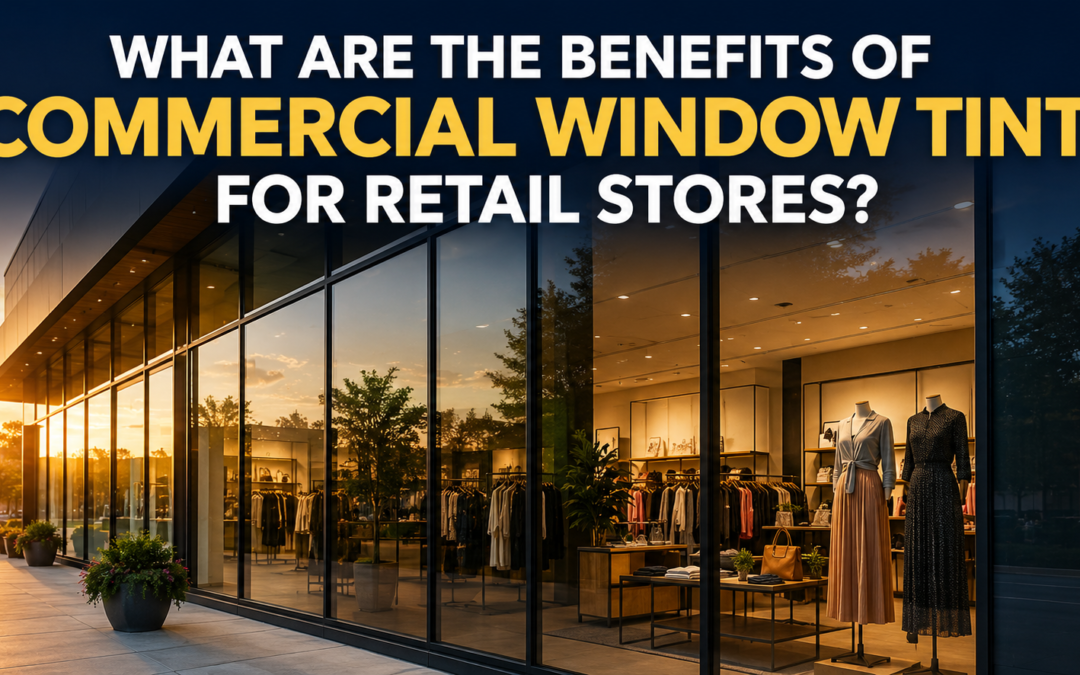
Commercial window tint reduces indoor heat, blocks up to 99% of UV rays, cuts glare on screens and merchandise, and lowers cooling costs in retail stores — without replacing the storefront glass. It also protects products from sun fading and gives a storefront a cleaner, more modern look.
Walk into a store on a bright afternoon and the effect is obvious: a hot spot by the entrance, a washed-out display case, merchandise that’s started to fade near the window. Lighting and temperature shape how long customers stay and how a store looks, and the large storefront glass that makes a retail space feel open also lets in too much heat, glare, and UV.
Commercial Window Tint solves this without covering up the windows that make a storefront inviting in the first place. A professionally installed film manages sunlight while protecting merchandise, lowering cooling costs, and sharpening a store’s appearance. The same principle protects homes, where home window tinting services guard floors and furniture from the same kind of sun damage.
What Is Commercial Window Tint?
Commercial window tint is a thin, optically clear film professionally applied to existing storefront glass. It filters incoming sunlight to reduce heat transfer, block UV rays, and cut glare, without the cost or downtime of replacing the glass.
Film choice depends on a retailer’s priority. Some businesses want heat and energy savings; others want a branded look or extra privacy. A common choice for storefronts is reflective solar film, which reduces solar heat gain while giving the exterior glass a sleek, low-glare finish that doubles as daytime privacy.
How Does Commercial Window Tint Reduce Heat and Improve Comfort in Retail Stores?
Window film blocks a large share of solar heat before it ever reaches the glass, which keeps entrances, displays, and checkout counters from turning into hot spots during peak sun hours.
Storefront windows typically face several hours of direct sun a day. Without a barrier, that heat tends to build up near:
- Entrances and vestibules
- Product displays and mannequins facing the glass
- Checkout counters positioned near windows
- Seating or waiting areas
A more balanced indoor temperature keeps customers browsing longer and gives employees a more comfortable place to work, which matters most for stores in warmer regions like Jacksonville.
Can Window Tint Lower Energy Costs for Retail Businesses?
Yes. By blocking solar heat at the glass instead of letting air conditioning compensate for it, window film reduces the load on a store’s HVAC system and helps it run less often during business hours.
In Florida’s climate, where cooling makes up a large share of a retail building’s energy bill, the savings from reduced solar heat gain tend to be more noticeable than in milder climates. An energy saving window film upgrade is one of the few retrofits that improves comfort and lowers operating costs at the same time, without any change to the building’s exterior.
Does Window Tint Protect Merchandise from UV Damage and Fading?
Yes. Quality window film blocks up to 99% of incoming UV rays, which are the main cause of fading and discoloration in items placed near storefront glass, including:
- Clothing and fabrics
- Furniture and product displays
- Flooring and interior décor
- Signage and printed materials
UV damage isn’t limited to merchandise on display. The same sun exposure that fades a shirt on a rack also fades flooring and furniture near the window — a problem covered in more detail in All Spec’s guide to floor fading prevention. Reducing that exposure helps retailers protect both their inventory and their interior finishes.
How Does Window Tint Reduce Glare in a Retail Store?
Window film cuts harsh reflections on glass displays, digital signage, and checkout screens while still letting natural light into the space.
Excessive glare makes it harder for customers to see products clearly and can make POS screens and digital displays difficult to read at certain times of day. A properly tinted storefront keeps the natural light without the glare, making it easier for customers to browse and easier for staff to work at screens positioned near windows.
Can Window Film Improve a Storefront’s Appearance and Privacy?
Yes. Decorative and frosted films let retailers upgrade outdated, overly reflective, or plain glass without renovating the storefront.
Decorative window tint can incorporate branding, add a frosted or textured look, or block direct outside sightlines into stockrooms and back-of-house areas while keeping the sales floor bright. A professionally installed film gives a storefront a more polished, current look that supports how customers perceive the brand before they even walk in.
Why Do Retail Businesses Trust All Spec Sun Control for Commercial Window Tint?
All Spec Sun Control has installed window film for Jacksonville-area homes and businesses since 1983 and holds 3M Authorized Dealer status, meaning every commercial installation is backed by 3M’s product warranty and completed by factory-trained installers.
That combination of four decades of local experience and a manufacturer-backed warranty is what most retailers are actually evaluating when they compare “window tinting near me” results, more than price alone.
Commercial Window Tint Benefits at a Glance
| Benefit | What It Solves | Best Film Type |
|---|---|---|
| Heat reduction | Hot spots near entrances and displays | Reflective solar film, ceramic film |
| Energy savings | High cooling costs from solar heat gain | Energy-saving window film |
| UV & fade protection | Faded merchandise, flooring, and displays | UV-blocking film (up to 99% UV rejection) |
| Glare reduction | Hard-to-read screens, signage, and displays | Neutral, low-reflective film |
| Appearance & branding | Outdated or plain storefront glass | Decorative window tint |
| Privacy | Visibility into stockrooms or back-of-house | Frosted or decorative film |
Conclusion
Commercial window tint helps retail stores create a more comfortable space for customers and employees while protecting merchandise, lowering cooling costs, and improving how a storefront looks from the street. For businesses that want to solve more than one of these problems at once, it’s one of the few upgrades that pays for itself in comfort, protection, and energy savings without touching the existing glass.
All Spec Sun Control installs commercial and home window tinting for Jacksonville businesses and homeowners, backed by more than 40 years of local experience and 3M’s manufacturer warranty. Contact All Spec Sun Control to get a window film recommendation for your storefront.
Related Reading
- Commercial window tinting in Jacksonville: what to expect from a local installer
- Why businesses prefer 3M window tint for commercial buildings
- The business benefits of commercial building window tinting
FAQs
Does commercial window tint block natural light?
No. Quality window film reduces heat and glare while still allowing natural light to brighten the sales floor.
How long does commercial window film last?
Professionally installed window film typically lasts many years and is backed by a manufacturer warranty when installed by an authorized dealer.
Can window tint protect retail products from fading?
Yes. Window film blocks up to 99% of UV rays, the primary cause of fading in merchandise, fabrics, and flooring near storefront glass.
Does window tint reduce glare on screens and digital displays?
Yes. Window film reduces harsh reflections on glass, signage, and POS screens without darkening the store or blocking natural light.
Can commercial window tint improve privacy without making a store look dark?
Yes. Frosted and decorative films block direct sightlines into stockrooms or back-of-house areas while keeping the sales floor bright.
Is window tint more affordable than replacing storefront windows?
For most retailers, yes. Window film delivers similar heat, UV, and glare benefits at a fraction of the cost and downtime of replacing glass.
Will commercial window tint interfere with Wi-Fi, POS systems, or security signals?
Most modern dyed and ceramic films have no measurable effect on Wi-Fi, cellular, or security signals. Older metalized films can interfere with radio frequencies, which is why film type matters for tech-heavy retail spaces — see our ceramic tint vs. standard film comparison for details.
What is the best window tint for a retail storefront?
It depends on the store’s priority: ceramic or reflective solar film for heat and energy savings, UV-blocking film for protecting merchandise, or decorative film for privacy and branding. A professional assessment matches film type to sun exposure and goals.
Can the same window film benefits apply to homes?
Yes. Homeowners get the same heat reduction, UV protection, glare control, and privacy benefits from residential window tinting.